
Black Friday sale is now on
After testing Ergatta’s game-based rowing platform, here’s whether this premium water rower justifies its price.
What We Liked
- ✓ Gaming mechanics actually work – Workouts fly by when you’re chasing targets or racing yourself
- ✓ Water resistance feels incredibly natural – Smoother and more realistic than air or magnetic systems
- ✓ Beautiful wood construction – Looks like furniture, not gym equipment in your living room
- ✓ Adaptive difficulty adjusts to your performance – Gets harder as you improve, easier when you struggle
- ✓ Lite model offers outstanding value – 90% of the experience for $700 less than the Luxe
- ✓ Dual-rail system glides perfectly – Zero wobble or inconsistency during any intensity level
- ✓ Quiet enough for apartments – Gentle whooshing beats the airplane noise of air rowers
- ✓ Unlimited household profiles included – Everyone gets personalized tracking for one membership price
What Could Be Better
- ⊘ Closed platform blocks all streaming apps – No Netflix, Spotify, or third-party content allowed
- ⊘ Narrow foot placement feels cramped – Single strap design makes positioning both feet tricky
- ⊘ Lite wobbles easily when stored vertically – Less stable than Luxe, potential tip hazard with kids or pets
- ⊘ Assembly takes a full hour – Filling the water tank requires patience and proper technique
- ⊘ Gaming has a learning curve – Takes several sessions to get comfortable with the mechanics
- ⊘ Not ideal for competitive rowing training – Built for fitness and engagement, not performance metrics
If you’ve been looking at smart rowing machines, you’ve probably seen Ergatta pop up alongside names like Hydrow and Peloton. The pitch is simple: turn your cardio into a game, make it engaging, and you’ll actually use the thing instead of letting it become an expensive clothes rack.
I’ll be honest, I was skeptical. Gaming elements in fitness equipment often feel gimmicky.
But after several weeks testing both the Ergatta Lite and Luxe models, I came away impressed with how the company approached the connected rower market. Not blown away, but definitely surprised.
This isn’t trying to replicate the instructor-led outdoor content you get with Hydrow, nor is it attempting the full gaming immersion of Aviron.
Ergatta took a completely different direction, focusing on competitive challenges, races, and rhythm-based workouts that keep you engaged through gameplay rather than scenic views or elaborate game worlds. For certain types of users, it might actually be the better choice.
Table of Contents
▼What Makes Ergatta Different
2 machine options
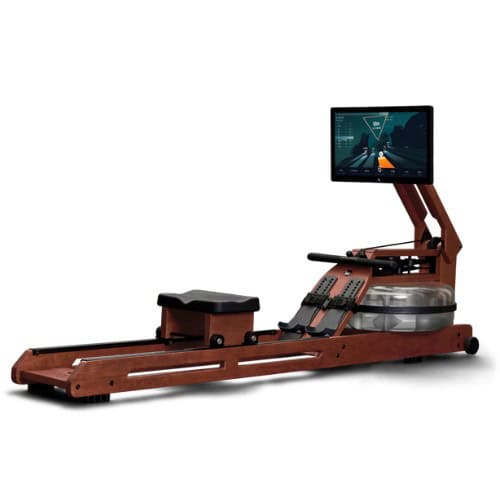
Ergatta Luxe: The premium model featuring a 21-inch touchscreen, high-fidelity speakers, and handcrafted cherrywood construction. Higher weight capacity (500 lbs) and accommodates taller users up to 6’8″.
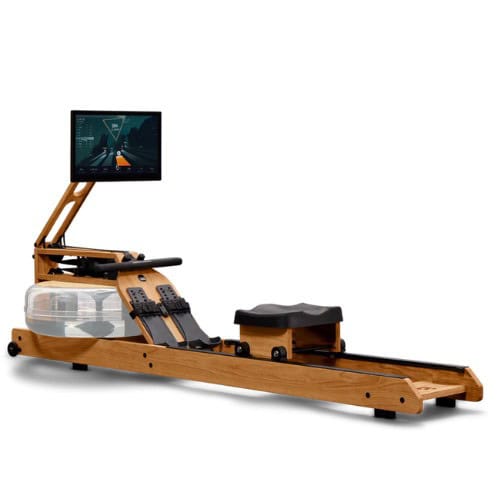
Ergatta Lite: The budget-friendlier option with a 17.3-inch touchscreen, lightweight oak frame, and compact footprint. Same water resistance and gaming platform as the Luxe at a significantly lower price point.
The rowing machine market has exploded over the past few years, and most smart rowers follow a similar formula: add a screen, stream instructor-led classes, maybe throw in some scenic routes. Ergatta ignored that playbook entirely.
Instead of instructors shouting motivation at you, Ergatta built a platform around game-based fitness. You’re racing against previous versions of yourself, competing in real-time challenges, hitting rhythm targets, and chasing achievement milestones. The entire experience is designed around competition and progression rather than following along with a trainer.
The hardware itself is a water rower, which immediately sets it apart from the electromagnetic resistance systems used by machines like Hydrow. Water resistance provides a smooth, realistic rowing feel that closely mimics actual on-water rowing.
The sound is pleasant too. That gentle whooshing noise is far more tolerable than the loud whir of an air rower like the Concept2.
Both models use beautiful wood construction. The Luxe features handcrafted cherrywood, while the Lite uses oak. These aren’t the industrial-looking metal frames you see on most fitness equipment. They’re designed to look like furniture, which matters if your rower lives in your living room rather than tucked away in a garage gym.
The Two Models: Ergatta Lite vs Ergatta Luxe
Ergatta currently offers two models, and the differences are more significant than you might expect.
Ergatta Luxe
Price: $1,999 (currently on sale from $2,499)
The Luxe is the premium option and the one I spent most of my testing time on. It features a 21-inch HD touchscreen, noticeably larger than the Lite’s 17.3-inch display. The extra screen real estate makes a difference when you’re mid-workout trying to track your position in a race or hit rhythm targets.
The speakers are impressive. High-fidelity, immersive audio that doesn’t sound tinny or cheap. Music plays a bigger role in Ergatta workouts than you might expect (especially during rhythm challenges), so quality sound matters.
The cherrywood construction is gorgeous. It’s substantially built at 105 pounds, with a weight capacity of 500 pounds and accommodation for users up to 6’8″ tall. The footprint is 86 inches long by 23 inches wide, so you’ll need proper space for it.
Assembly was straightforward, taking about an hour including filling the water tank. Everything felt solid and well-engineered during setup.
Read full review
Ergatta Lite
Price: $1,299 (currently on sale from $1,699)
The Lite is Ergatta’s more affordable, space-conscious option. At 72 pounds, it’s significantly lighter than the Luxe, which makes it easier to move around. The dimensions are slightly more compact at 82 inches long by 23 inches wide.
It uses oak wood instead of cherrywood. I actually preferred the lighter oak aesthetic, though that’s purely subjective. The 17.3-inch touchscreen is smaller but perfectly adequate for the workouts. You’re not straining to see metrics or game elements.
The trade-offs are in capacity and height accommodation. The Lite maxes out at 320 pounds and 6’4″ in user height. The speakers are standard quality rather than the upgraded audio on the Luxe.
One tester on our team is 6’4″ exactly and didn’t hit the seat stoppers at the back, having about an inch of clearance. Shorter users with particularly good ankle mobility might occasionally hit the front stoppers during the drive phase, but this wasn’t an issue for most of our testing.
Read full review
| Feature | Ergatta Luxe | Ergatta Lite |
|---|---|---|
| Price | $1,999 (was $2,499) | $1,299 (was $1,699) |
| Wood | American cherrywood | Oak |
| Screen | 21″ HD touchscreen | 17.3″ HD touchscreen |
| Weight | 105 lbs | 72 lbs |
| Length | 86 inches | 82 inches |
| Max User Weight | 500 lbs | 320 lbs |
| Max User Height | 6’8″ | 6’4″ |
| Speakers | High-fidelity upgraded | Standard |
| Software | Identical | Identical |
Which One Should You Buy?
For most people, the Lite makes more sense.
The $700 price difference is substantial, and unless you specifically want the larger screen, premium speakers, or need the higher weight capacity, you’re getting essentially the same workout experience.
I’d recommend the Luxe if you’re over 6’4″, exceed 320 pounds, or plan to use off-rower content extensively where the larger screen becomes more valuable. The superior audio is nice but not worth $700 on its own.
The Gaming Experience
This is where Ergatta either wins you over or loses you completely.
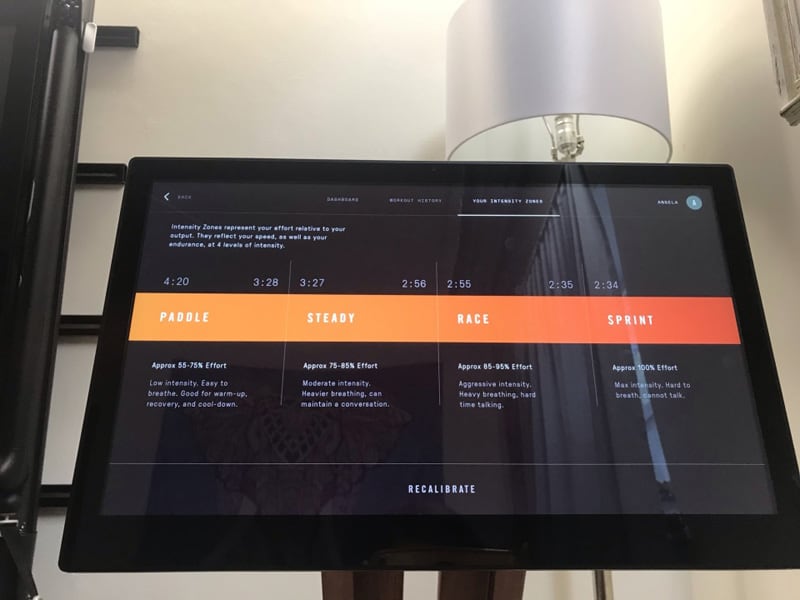
The platform requires a 1,000-meter calibration row when you first set up. This establishes your baseline fitness level and ensures the adaptive difficulty actually works. You can redo this calibration anytime as your fitness improves.
Solo Games
These are my favorites. As someone who prefers training alone rather than in group classes, the solo challenges hit perfectly.
Wavelength Format: You’re matching a target rhythm, trying to keep your stroke rate consistent with the pattern shown on screen. Sounds simple. It’s not. Requires genuine focus and control.
Beat Challenges: Similar to rhythm games like Beat Saber, you’re timing your strokes to hit specific beats. The music integration here is excellent, and these workouts fly by. During one session in week two, I looked down expecting maybe 15 minutes had passed. Twenty-eight minutes. That’s when I realized the games actually work.
Target Practice: You’re essentially hitting targets with your rowing effort, similar to meteor game formats. These sessions tend to be higher intensity.
The difficulty adapts based on your performance. Crush a workout? The next one gets harder. Struggle? It backs off slightly. This adaptive system works well in practice, though there’s definitely a learning curve if you’re not naturally inclined toward gaming mechanics.
Racing
You can race other Ergatta users or compete against previous versions of yourself. The “race previous you” feature is brilliant for tracking improvement. There’s something uniquely motivating about literally chasing your own ghost from last week.
Community races are available for those wanting real-time competition, though I found the solo racing more engaging. Your mileage will vary depending on how much you care about competing with strangers.
Instructed Rows and Free Rowing
Not everything is gamified. Ergatta includes traditional instructed rows with actual coaches guiding you through workouts. The instructors are good. They’re not overly enthusiastic or in your face, which I appreciated.
Free row mode lets you set your own intervals or just row without any structure. There are also scenic POV rides, including some absolutely gorgeous footage filmed in places like Loch Lomond in Scotland. These don’t have the automated terrain adjustment you get with outdoor content on other platforms, but they’re pleasant if you just want something nice to look at.
The AI coach is available to help with form, fitness progression, and endurance building. I didn’t use this feature extensively, but the feedback I received was relevant and useful.
The Membership
Like most connected fitness equipment, you absolutely need the membership to make Ergatta worthwhile. It’s $39 per month if you pay monthly, or you can prepay for discounts: $32.50/month on a 1-year plan, $29/month on a 3-year plan, or $27/month on a 5-year plan.
Without the membership, you can technically use the rower. But you lose access to all the games, workouts, progress tracking, and competitive features. You’re left with basic rowing functionality and the ability to save your data. That’s it.
At these prices, buying Ergatta without the membership makes no sense.
The membership covers unlimited household profiles, which helps justify the cost if multiple people use the rower. My partner and I both have separate accounts tracking individual progress and achievements.
One significant limitation: this is a closed system. You cannot stream Netflix, Spotify, or any third-party apps on the screen. Ergatta’s position is that opening the platform to external streaming would dilute the focused gaming experience they’ve built. I understand the reasoning, but it’s worth noting if you’re comparing to other platforms that now include streaming integration.
You can obviously mute the rower’s sound and listen to your own music on your phone (which is what I sometimes did). But the lack of built-in Spotify access feels like an unnecessary restriction.
Performance and Build Quality
Both models use water resistance with no adjustable drag settings. The resistance scales naturally with your effort. Pull harder, and you get more resistance. This took some mental adjustment coming from the Concept2, where I’m used to adjusting the drag factor. But I grew to like it. The resistance curve feels more natural and closely mimics actual on-water rowing.
The dual-rail system on both models is excellent. The seat glides smoothly with zero wobble or inconsistency. After testing numerous rowers, I’d rate Ergatta’s sliding action as top-tier. It’s smoother than most water rowers I’ve used and comparable to the premium feel you get on higher-end machines.
The seat comfort is good. Not the most plush padding I’ve experienced, but adequate for sessions up to an hour without discomfort. The ergonomic design provides proper support where it matters.
Handles have a rubberized grip rather than knurling. They’re comfortable and don’t get slippery with sweat, though I would have preferred knurled metal. The footplates are solid with good strap quality, though they use a single strap rather than individual straps for each foot. This occasionally made it tricky to get both feet positioned correctly.
The foot placement is narrow, which simulates boat rowing but might feel cramped for larger users or those with mobility limitations. This wasn’t an issue for me but is worth noting.
Noise Level
Water rowers make a distinctive whooshing sound. It’s not silent, but it’s far quieter and more pleasant than air rowers. I’d compare it to a dishwasher running in the next room. Suitable for apartment use in most cases, though your downstairs neighbors might hear the seat rolling during intense intervals.
Compared to the Concept2 RowErg, which can sound like a small airplane taking off, the Ergatta is whisper-quiet. It’s also quieter than electromagnetic systems, which can have a subtle hum under load.
Storage and Portability
Both models store vertically, which significantly reduces the footprint when not in use. The Lite is notably easier to move at 72 pounds versus the Luxe’s 105 pounds. Both have integrated wheels for transport.
When stored vertically, the Lite is less stable than the Luxe. It’s easy to wobble or potentially knock over, which could be a concern if you have small kids or pets running around.
The Lite arrives in two manageable packages that one person can handle. The Luxe requires freight delivery on a pallet. Assembly for both models is straightforward if you follow the instructions.
Ergatta vs the Competition
The connected rower market is crowded, so understanding how Ergatta stacks up against alternatives matters.
The Concept2 is the industry standard. At around $1,000, it’s cheaper than either Ergatta model. It uses air resistance (loud, different feel than water), and it’s built like a tank with a 500-pound weight capacity and a 2-year warranty.
But the Concept2 has no screen, no content, and no guided workouts. It’s purely a performance machine. You row, it tracks your metrics, and that’s it.
If you’re a serious rower who just wants to track splits and doesn’t care about entertainment or coaching, get the Concept2. You’ll save money and get the most proven rower on the market.
If you want an engaging experience with immersive content, Ergatta is worth the premium. The gaming approach makes workouts fly by in a way that staring at the Concept2’s basic monitor never will.
These represent fundamentally different philosophies.
Hydrow focuses on instructor-led outdoor rowing filmed in real locations worldwide. The content is immersive, and instructors guide you through each workout while you follow along on their actual outdoor rows.
Hydrow uses electromagnetic resistance across all three models (Wave, Origin, and Arc), which is smooth and nearly silent. The resistance system offers 300 levels of adjustment. The machines are heavier and more substantial than Ergatta, with the Arc and Origin both weighing around 145 pounds.
Price-wise, Hydrow’s Wave starts at under $1,500, the Origin around $2,200, and the Arc at $2,295. The membership is $44/month (compared to Ergatta’s $39). However, Hydrow now includes Netflix, Amazon Prime Video, and Spotify streaming with the membership.
The biggest difference is the content approach. If you’re drawn to scenic outdoor rowing with trainer guidance, Hydrow is superior. If you’re motivated by competitive gaming and progression mechanics, Ergatta will likely keep you more engaged.
Ergatta’s water resistance feels more natural to me than Hydrow’s electromagnetic system. The wooden construction is also far more aesthetically pleasing if your rower lives in a visible area of your home.
Peloton entered the rowing market with their signature studio class format. The Peloton Row features a 24-inch rotating HD touchscreen, electromagnetic resistance, and access to Peloton’s massive library of instructor-led classes.
At $3,195, the Peloton Row is significantly more expensive than either Ergatta model. The membership is $44/month.
Peloton’s strength is the studio class experience and the broader ecosystem. If you already own Peloton equipment and love their instructors, the Row integrates seamlessly. The screen rotates for off-rower floor workouts, and you get access to strength training, yoga, and other content beyond rowing.
The weakness is that Peloton leans heavily into its signature high-energy group class vibe. If that’s not your preference, you’re paying a premium for content you won’t use.
Ergatta costs less, looks better in your home, and focuses exclusively on what makes rowing engaging through competitive gameplay. You sacrifice the broader content library, but you save over $1,000 upfront.
Aviron takes gaming to the extreme with elaborate game worlds, Netflix integration, and competitive racing. The Strong Series model costs around $2,199 with a 22-inch touchscreen. The membership is $29/month.
The trade-off is that Aviron feels less like a fitness tool and more like a gaming console that happens to involve rowing. I found the games often distracted from the actual workout rather than enhancing it.
Ergatta strikes a better balance. The gaming elements enhance motivation without overwhelming the core fitness experience. The adaptive difficulty also works better on Ergatta, actually adjusting to your performance rather than just making games harder.
Aviron uses magnetic resistance, which is quieter than water but doesn’t provide the same realistic feel. The build quality is solid but lacks the furniture-grade aesthetic of Ergatta’s wood construction.
Comparison Table
| Feature | Ergatta Lite | Ergatta Luxe | Concept2 RowErg | Hydrow Wave | Peloton Row |
|---|---|---|---|---|---|
| Price | $1,299 | $1,999 | ~$1,000 | Under $1,500 | $3,195 |
| Screen Size | 17.3″ | 21″ | None | 16″ | 24″ |
| Resistance | Water | Water | Air | Electromagnetic | Electromagnetic |
| Weight | 72 lbs | 105 lbs | 57 lbs | 102 lbs | ~100 lbs |
| Weight Capacity | 320 lbs | 500 lbs | 500 lbs | 350 lbs | 300 lbs |
| Max Height | 6’4″ | 6’8″ | 6’8″+ | 6’8″ | 6’4″ |
| Membership | $39/mo | $39/mo | None required | $44/mo | $44/mo |
| Content Focus | Gaming/Competition | Gaming/Competition | Performance tracking | Outdoor instructor-led | Studio classes |
| Streaming Apps | No | No | N/A | Yes (Netflix, Spotify) | Limited |
| Frame Material | Oak wood | Cherrywood | Aluminum/Steel | Polymer | Steel/Aluminum |
Who Should Buy Ergatta
Ergatta is ideal for:
Competitive personalities: If you’re motivated by rankings, achievements, and progression systems, the gaming mechanics will keep you engaged workout after workout.
Solo trainers: People who prefer working out alone rather than in group settings or following instructors will appreciate the solo game modes and self-paced challenges.
Budget-conscious buyers: At $1,299 for the Lite, Ergatta is one of the more affordable connected rower options while still delivering a premium experience.
Aesthetic-focused home gym owners: If your equipment lives in your living room or bedroom, the beautiful wood construction looks like furniture rather than gym equipment.
Beginners to rowing: The “Learn to Row” content and adaptive difficulty make this accessible for newcomers. The games also help you forget you’re exercising, which lowers the intimidation factor.
Families or multi-user households: Unlimited profiles means everyone gets personalized workouts and individual progress tracking for one membership price.
Who Should Skip It
Ergatta might not work for:
Those wanting instructor-led content: If you prefer following trainers through structured classes, other platforms offer more traditional coaching formats.
People needing third-party app access: The closed platform means no Netflix, no Spotify, no external streaming. If this flexibility matters to you, look elsewhere.
Users who dislike gaming mechanics: If the whole concept of fitness gaming sounds annoying rather than engaging, you’ll probably find Ergatta frustrating. The gaming is core to the experience, not optional.
Very tall or heavy users considering the Lite: If you’re over 6’4″ or above 320 pounds, you’ll need the Luxe for proper accommodation.
Those expecting quick assembly: While not terrible, setup takes time and you’ll need to deal with filling the water tank. If you want plug-and-play simplicity, this isn’t it.
Serious rowers training for competition: If you’re training for actual rowing competitions or need precise performance metrics, the Concept2 remains the gold standard. Ergatta is designed for fitness and engagement, not competitive rowing training.
The Verdict
I enjoyed testing both Ergatta models. The gaming approach works better than I expected, the water resistance feels fantastic, and the build quality is solid throughout. The wooden construction is beautiful, the dual-rail system is smooth, and the adaptive difficulty kept workouts challenging without being overwhelming.
The Lite is the better value for most buyers. At $1,299, you’re getting about 90% of the Luxe experience for $700 less. Unless you specifically need the larger screen, premium audio, or higher weight capacity, save your money.
My main frustrations are the closed platform and the narrow foot placement. The inability to stream Spotify or Netflix feels unnecessarily restrictive, especially when competitors like Hydrow now offer this flexibility. The foot strap design and narrow stance occasionally caused positioning issues, though this wasn’t a dealbreaker.
Compared to the Concept2, Ergatta wins on engagement and aesthetics but loses on pure durability and value for serious athletes. Against Hydrow, Ergatta is more affordable and offers better resistance feel, but Hydrow’s content library and platform openness give it an edge for certain users. The Peloton Row offers broader content but costs significantly more for features you might not use.
For competitive, data-driven users who prefer solo training, Ergatta is excellent. The games work to maintain engagement, the hardware is well-built, and the pricing is reasonable for what you get. Just know what you’re getting into with the closed platform and monthly membership requirement.
If you’re on the fence, the 30-day return policy gives you a full month to test whether the gaming approach works for you. That’s enough time to get past the initial learning curve and see if the competitive mechanics keep you coming back.
FAQ
How much space does an Ergatta rower need?
The Luxe measures 86″ long by 23″ wide, while the Lite is slightly shorter at 82″ long by 23″ wide. When stored vertically, the footprint reduces significantly, though you’ll still need about 86″ of ceiling height. Factor in a few extra feet around the machine for comfortable rowing.
Can you use Ergatta without the membership?
Technically yes, but it’s pointless. Without the $39/month membership, you lose access to all games, workouts, competitions, and the adaptive training system. You can perform basic rows and save your data, but you’re missing everything that makes Ergatta worth buying.
What’s the difference between Ergatta Lite and Luxe?
The Luxe features a larger 21″ screen versus the Lite’s 17.3″, premium audio speakers, cherrywood construction instead of oak, higher weight capacity (500 lbs vs 320 lbs), and accommodates taller users (6’8″ vs 6’4″). The Luxe weighs 105 lbs versus the Lite’s 72 lbs and costs $700 more.
Is Ergatta better than Hydrow?
They serve different preferences. Ergatta focuses on game-based competition with water resistance and wooden construction. Hydrow emphasizes instructor-led outdoor content with electromagnetic resistance. Ergatta is more affordable and aesthetically pleasing. Hydrow offers more content variety and platform flexibility with Netflix/Spotify integration.
How loud is the Ergatta rower?
Water rowers produce a gentle whooshing sound that’s comparable to a dishwasher in the next room. It’s significantly quieter and more pleasant than air rowers like the Concept2. Generally apartment-friendly, though you might hear the seat rolling during intense sessions.
What is the Ergatta membership cost?
Monthly membership is $39. You can prepay for discounts: $390/year (works out to $32.50/month), $1,044 for 3 years ($29/month), or $1,620 for 5 years ($27/month). The membership includes unlimited household profiles.
Can you watch Netflix on Ergatta?
No. Ergatta uses a closed platform that doesn’t allow third-party streaming apps. You cannot access Netflix, Spotify, or other external services on the screen. You can mute the rower and use your phone for music, but built-in streaming isn’t available.
How tall do you need to be to use Ergatta?
The Luxe accommodates users up to 6’8″ with a 500-pound weight capacity. The Lite maxes out at 6’4″ and 320 pounds. Both models should work comfortably for most average-height users. Very short users with exceptional ankle mobility might occasionally hit the front seat stoppers.
Is Ergatta good for beginners?
Yes. The “Learn to Row” content teaches proper form and technique. The adaptive difficulty system adjusts to your fitness level, making it accessible for newcomers. The gaming elements also help beginners stay engaged when traditional rowing might feel monotonous.
How long does Ergatta assembly take?
Expect about an hour for full assembly, including filling the water tank. The Lite arrives in two packages that one person can manage. The Luxe requires freight delivery. Instructions are clear, but you’ll need basic tools and patience for filling the water resistance tank properly.
Can multiple people use one Ergatta membership?
Yes. The membership includes unlimited user profiles for your household. Each person gets individual accounts, separate progress tracking, personalized adaptive workouts, and their own achievement history. This makes the monthly cost more reasonable for families or couples.
What is the warranty on Ergatta rowers?
Ergatta offers a 5-year warranty on the frame, 2-year warranty on components, and 1-year warranty on pads, grips, and wear items. They also provide a 30-day return window if you’re not satisfied, though you’re responsible for return shipping and a 20% restocking fee applies.
Is Ergatta better than Concept2 for home use?
It depends on your priorities. The Concept2 is more durable, cheaper, and doesn’t require a subscription, making it better for serious rowers focused purely on performance. Ergatta offers a more engaging experience with games and adaptive workouts, making it better for casual users who need entertainment to stay motivated. The Concept2 also takes less maintenance and has a longer track record of reliability.
How does water resistance compare to air or magnetic resistance?
Water resistance provides the most realistic rowing feel, closely mimicking actual on-water rowing. It’s quieter than air resistance (like Concept2) but louder than magnetic/electromagnetic systems (like Hydrow or Peloton). The resistance scales naturally with your effort rather than requiring manual adjustment. The sound is pleasant and many users find it meditative rather than annoying.
Final Thought: Ergatta proves that turning fitness into a game isn’t just a gimmick. The competitive mechanics keep you coming back in a way that traditional rowing machines don’t. Just accept that you’re buying into a subscription model with a closed platform, and you won’t get Netflix binges with your workouts.