
Rowing machine review
Hydrow Workouts: The Classes, Coaches and Programs
 By Sam Watson · Updated 13 November 2026
We earn a commission if you buy through the links on this page, at no extra cost to you.
I've rowed on my own for years, and I didn't think I needed anyone in my ear. Hydrow's classes changed that. There are more than 6,000 workouts, most of them 20-minute rows filmed from a boat on real water, led by athletes who can actually coach, and they're the best rowing classes on any machine. The rowing is the star; the strength, yoga and Pilates are a strong bonus. Here's what each kind of class is like, the coaches I'd start with, the programs worth following, and how I'd build a week.
The library at a glance
- What's in it: rowing (coached rows, Journey rows with no coach, distance pieces, technique lessons), circuits, strength, Pilates, yoga, and mobility and stretching.
- How long: rows run from 5 to 60 minutes, most around 20; strength classes are 10, 20 or 30.
- Who leads it: 11 Hydrow athletes, including Olympians, a Paralympic champion and national team rowers.
- Where: filmed in more than 15 countries, from Lake George and Boston to Mount Fuji, Lucerne and Sydney Harbour.
The rowing classes, type by type
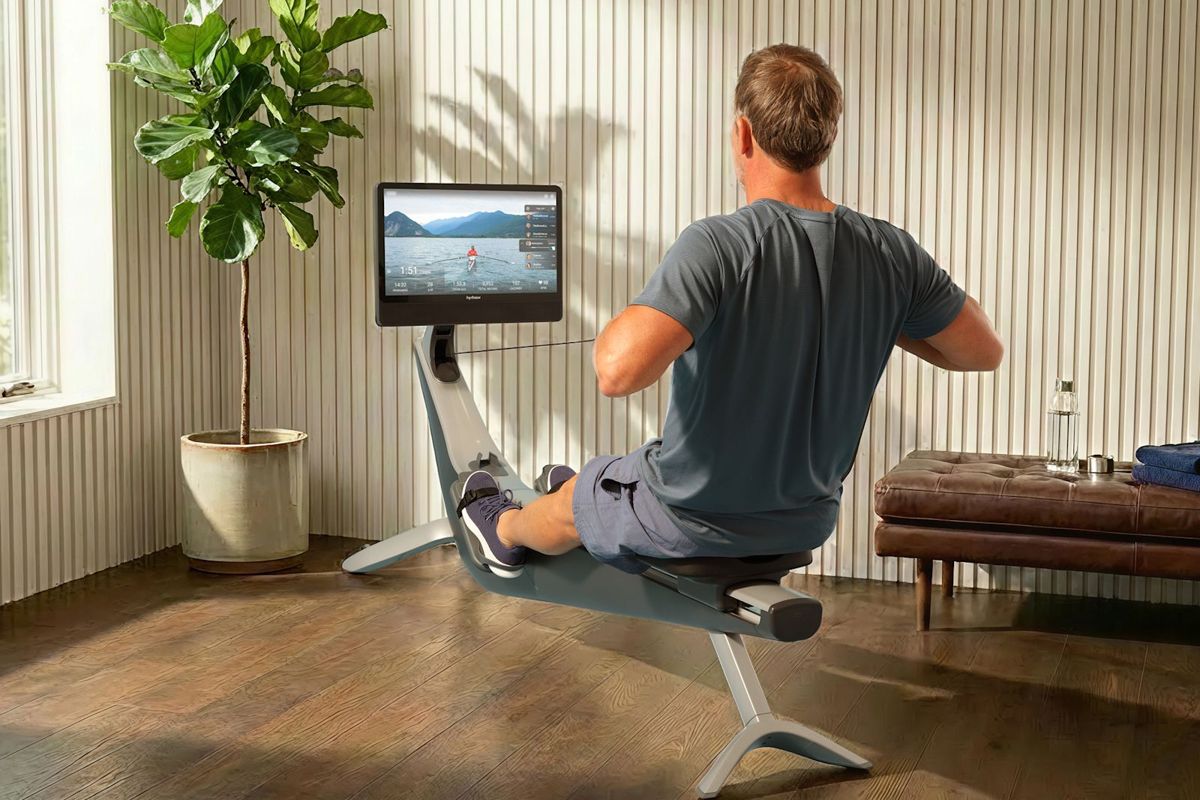
Hydrow sorts its rows by how hard they are and how they're built. Once you know the types, picking a class takes seconds.
Breathe: steady rowing
Hydrow's foundation: continuous rowing, mostly at 20 to 24 strokes a minute, with no rests. The athlete talks you through the stroke and the scenery, and the pressure moves up and down a little to keep you honest. This is the class I did most. It's where your fitness actually gets built, and the 20-minute ones go quicker than any steady row I've done on my own.
Sweat: the hard but friendly middle
Pieces of two to seven minutes at "run" and "sprint" pace, mostly 24 to 28 strokes a minute, with short rests between. It's what most people picture when they think of a rowing class, and it's the one I'd send a friend to first once they've done Learn to Row: hard enough to feel like a workout, never so hard it puts you off.
Drive: proper intervals
The fastest splits, highest rates (26 to 32) and shortest pieces, with close to equal work and rest. If you know HIIT, you know the shape. These are the classes that changed my mind about Hydrow: I expected pretty scenery and gentle coaching, and a 20-minute Drive left me on the floor.
Distance: your own pace
Nine set distances, rowed at whatever pace you choose. No coach pushing you, just the meters counting down. They're the closest Hydrow gets to a test, and I'd do one every few weeks to see the split come down.
Journey: just the water
Filmed rows with no athlete talking, only the view and the sound of the boat: Vancouver, Lucerne, Lake George in the fall. My recovery-day row. Put your own pace on it, and the time disappears.
Warm-ups, cool-downs and technique lessons
About five minutes each, at low rates, to start and finish a harder session. The technique lessons pick one part of the stroke at a time; the Row Smarter program strings three of them together.
Try a real class before you buy. This is one of Hydrow's own 20-minute rows, with Dani Hansen, posted on its YouTube channel. It's the fastest way to find out whether you'll like being coached like this.

The athletes, and who suits whom
You'll end up with favourites, and filtering by athlete is the quickest way to find a class you'll enjoy. This is the current team on Hydrow's athletes page (13 November 2026):
| Athlete | Background | Try them if |
|---|---|---|
| Dani Hansen | The most decorated Paralympic rower; created the Hydrow Games | You want technique explained properly, with energy |
| James Dietz | Former distance runner who rowed at the World Cup in Lucerne and the U23 Worlds | You want a hard row that doesn't feel serious; his stories make the time go |
| Mac Evans | Former D1 college rower and Irish step dancer | You like team spirit and a laugh |
| Mike Dostal | From Liverpool; British national champion, raced for Great Britain | You want no-nonsense, classic rowing coaching |
| Buffy Williams | Three-time Olympian and kinesiologist | You want efficient, high-energy sessions that fit a busy life |
| Aisyah Rafaee | Singapore's first Olympic rower | You want encouragement without pressure |
| Sera Moon Busse | Silver at the 2025 World Rowing Beach Sprints | You want grit; she's come back from injuries and coaches like it |
| Rina Thomas | Marine veteran; leads circuits | You want rowing and strength in one session |
| Peter Donohoe | Olympian and Hydrow's Director of Fitness; strength and mobility | You want mobility and strength that help your rowing |
| Owen Henn | Former university rower turned yoga teacher | You want yoga that understands rowers' tight hips and backs |
| Manteo Mitchell | Olympic relay silver medallist, famously finished a race on a broken leg | You want big energy and someone to make you laugh |
My picks to start: Dani for technique, James for a hard row that flies by, and Mike when I wanted the session to feel like proper rowing training.
Series and collections worth knowing
The Mac + Dani Row Show: two of the most fun coaches together. The lightest-hearted series in the library, and a good one for a day you don't feel like it.
Drop Your Split: built to make you faster over a few weeks. Pair it with a distance row before and after to see whether it worked.
Build Your Strength and Sprint Season: collections aimed at power and speed, for when steady rows start to feel easy.
Beginner Training Camp: 12 fundamental workouts that earn their own badge. The natural next step after Learn to Row.
The Hydrow Games: every summer, four weeks and 12 workouts. In 2026 (20 July to 24 August) the races were 2, 5, 7 and 16 minutes long, set by Dani to mirror classic racing distances, with strength, mobility and yoga sessions between them and a live leaderboard to finish.
Destination collections: sets of rows filmed in one place, which also earn destination badges. Collections come and go, so the library you see may have newer ones.
The programs
If you'd rather not choose every day, a program tells you what to do and when. They're the single best way to keep rowing after the first few weeks.
| Program | Length | My take |
|---|---|---|
| Learn to Row | 1 week, 4 sessions of about 5 minutes | Do it first, even if you've rowed before |
| Row Smarter | 3 sessions of about 20 minutes | Technique drills; worth repeating every few months |
| Cardio Kickstart | 4 weeks, 3 sessions a week, about 20 minutes | The best first plan for most people |
| Runner's Program | 3 weeks, 3 sessions a week, about 20 minutes | For runners adding rowing on easy days |
| Strong to the Core | 4 weeks, 5 sessions a week, about 20 minutes | A big commitment, but a good one between rowing blocks |
| Skill Season Challenge | 3 weeks, 3 sessions a week, about 20 minutes | A seasonal challenge with a leaderboard |
| Hydrow Games | 4 weeks each summer, 12 workouts | The best month on the platform if you like a goal |
On the mat: strength, Pilates, yoga and circuits
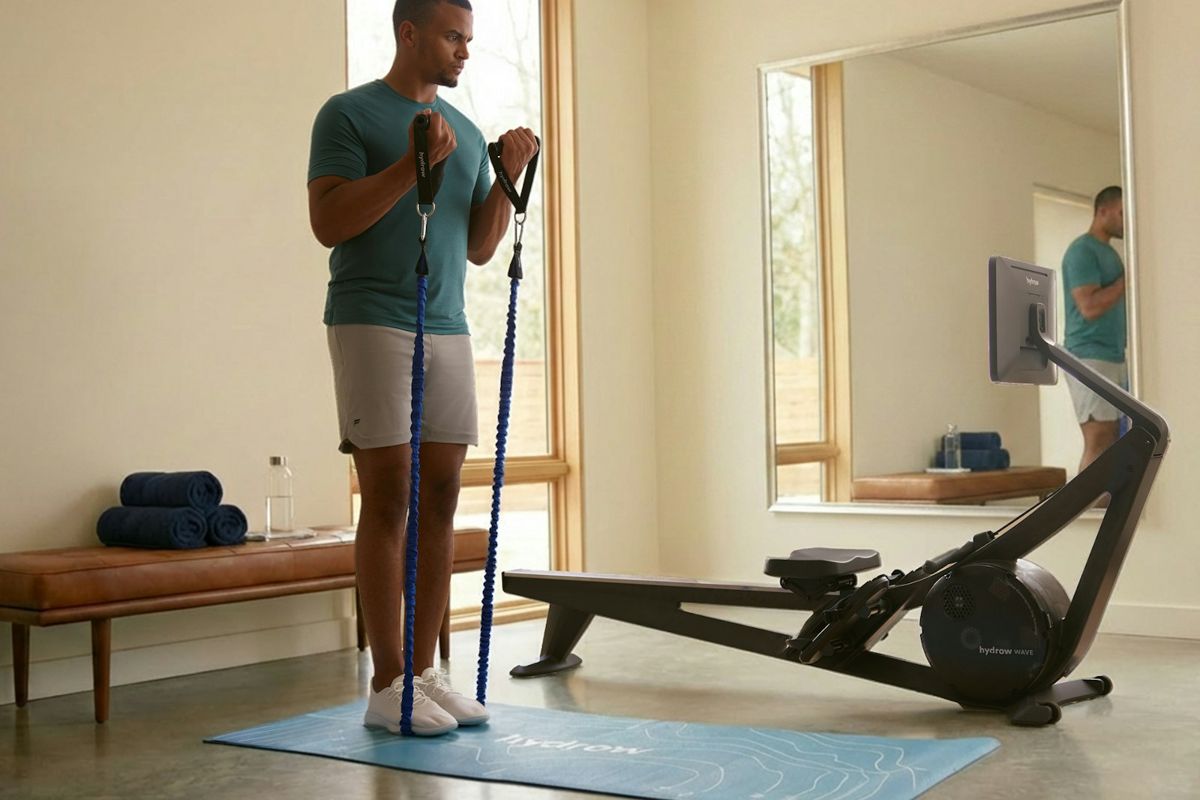
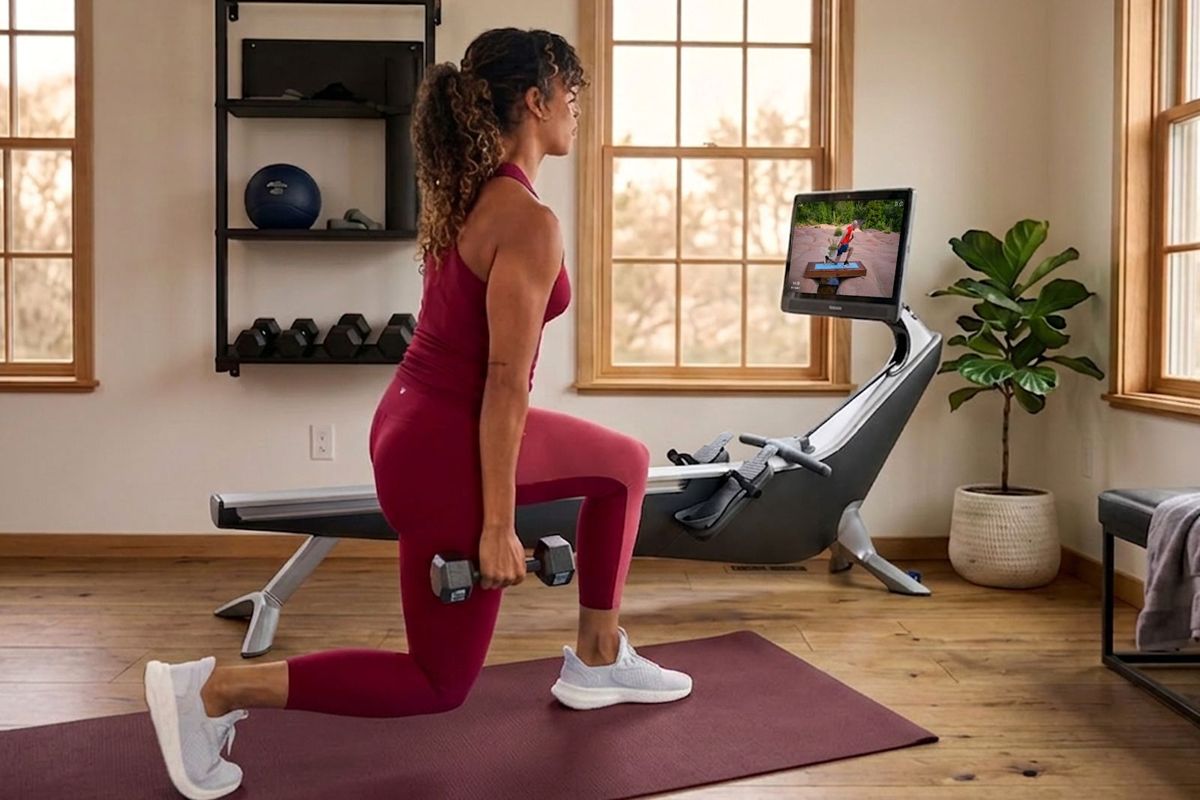
Strength: 10, 20 or 30 minutes with bodyweight or dumbbells, mixing HIIT-style rounds, slow "time under tension" holds and whole-body circuits. The 10-minute ones are the easiest strength habit I've ever kept: row, step off, ten minutes, done.
Pilates: core, glutes and lower back, which is exactly what rowing needs. Good on the days your legs are tired.
Yoga: three styles, Flow (moving from pose to pose), Align (the basics, for beginners or returners) and Restore (slow, long holds). Owen's classes feel written for rowers, with plenty for hips and hamstrings.
Mobility and stretching: short sessions to warm up or wind down, mostly with Peter. These were the classes I used most after a row.
Circuits: rowing pieces of one or two minutes with strength work on the floor in between, led by Rina. The best full-body session in the library if you only have half an hour.
You need your own mat and a pair of dumbbells; Hydrow's On the Mat kit ($120) has a mat, blocks and bands if you're starting from nothing. On the Origin and Arc the screen turns to face you on the floor; on the Wave it doesn't, so a phone or the TV app is easier there.
Where the rows are filmed
Most rows are filmed from the boat, so you see what the athlete sees, ferries and wakes and all, and new ones are filmed all the time. Places in the library include:
- United States: Lake George, Boston, Alaska, Miami, Maine, Newport Beach, Chicago, Sedona, Colorado, Waco and Hawaii.
- Europe: the Thames in London, Edinburgh, Loch Ness, Lake Lucerne, Lake Maggiore, Prague's Vltava, Seville, Norway, Achill Island and Dublin in Ireland, and Florence and Siena for mat classes.
- Further afield: Lake Kawaguchi under Mount Fuji, Queenstown in New Zealand, Sydney Harbour, Vancouver, Rio, Singapore and the Bahamas.
Lake George in the fall and the Mount Fuji rows are the ones I'd point anyone to first.
Two sample weeks
| Day | New to rowing | Already fit |
|---|---|---|
| Monday | Learn to Row session, then 10 minutes of mobility | 20-minute Drive row, 10-minute cool-down |
| Tuesday | Learn to Row session | 20-minute strength class |
| Wednesday | Rest | 30 to 40-minute Breathe row |
| Thursday | 20-minute Breathe row | Yoga or Pilates |
| Friday | 10-minute strength class | 20-minute Sweat row, then a 10-minute strength class |
| Saturday | 20-minute Sweat row | Long Journey row at an easy pace |
| Sunday | Rest, or an easy Journey row | Rest, or a distance row to test yourself every few weeks |
Once the first week is done, start a program (Cardio Kickstart for most people) and let it plan the rowing days for you. For a plan that works on any rower, there's our 30-day beginner plan.
What wore thin
- You can't build your own workout. The library is classes and set distances. If you want to programme your own intervals or train for a 2k time, a Concept2 monitor does that better.
- The screen only plays Hydrow. No Netflix, YouTube or Spotify on it. Journey rows are the nearest thing to rowing to a show.
- You'll find your favourites and stay there. It's worth forcing yourself to try a new athlete or place every week; the destination badges help.
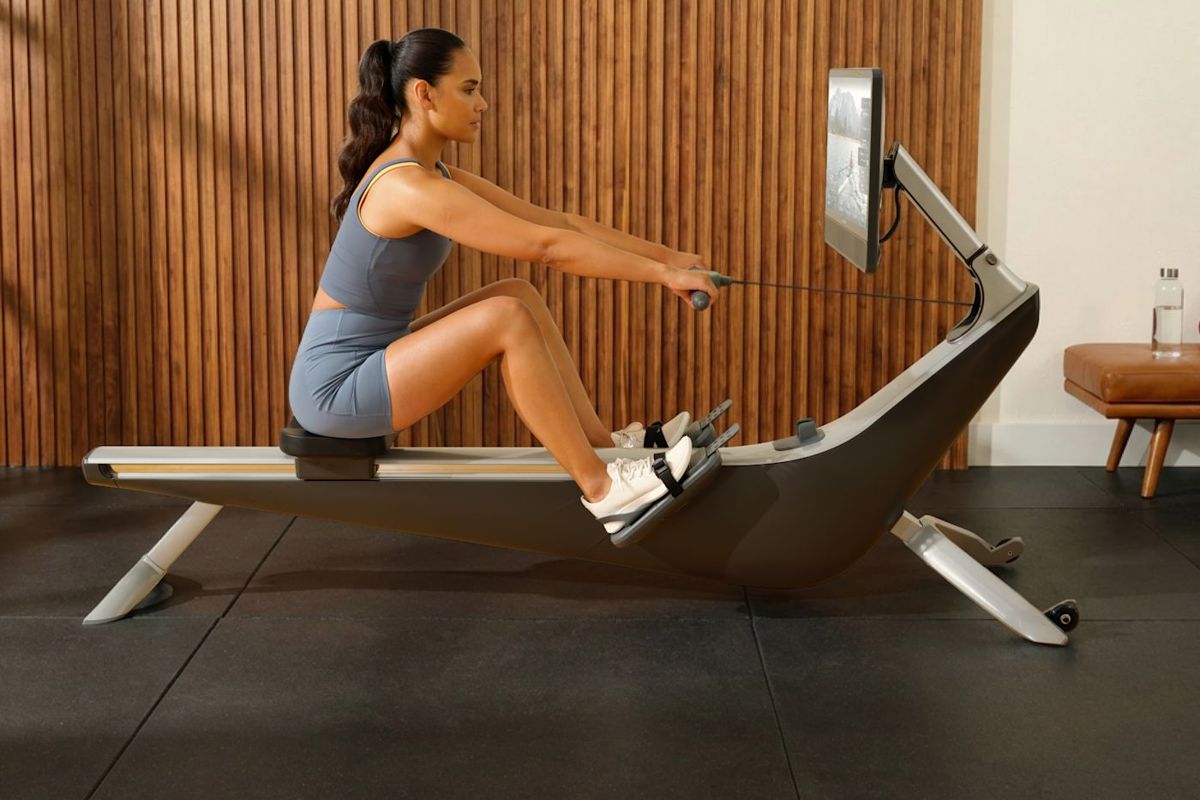
All of this comes with the $50 a month membership; what using it is like day to day is in our membership guide, and which machine to buy is in our Hydrow review.
See the Hydrow Origin at Hydrow
FAQ
How many workouts does Hydrow have?
More than 6,000, across rowing, circuits, strength, Pilates, yoga and mobility. Most rows are about 20 minutes.
What's the difference between Breathe, Sweat and Drive?
Breathe is steady rowing at 20 to 24 strokes a minute with no rests; Sweat is harder pieces of two to seven minutes at 24 to 28 with short rests; Drive is short, fast intervals at 26 to 32 with close to equal work and rest.
Does Hydrow have beginner workouts?
Yes. Learn to Row is four short sessions in your first week, and 12 fundamental workouts make up the Beginner Training Camp. Cardio Kickstart is a good first four-week plan.
Who are the Hydrow coaches?
Hydrow calls them athletes: Dani Hansen, James Dietz, Mac Evans, Mike Dostal, Buffy Williams, Aisyah Rafaee and Sera Moon Busse lead the rows, with Rina Thomas, Peter Donohoe, Owen Henn and Manteo Mitchell on circuits, strength, mobility and yoga.
Can you watch Netflix on a Hydrow?
No. The screen only plays Hydrow's classes: there's no Netflix, YouTube or Spotify, no web browser and no HDMI input.
Can I do Hydrow workouts without a rower?
The floor classes, yes, through the app. Without a Hydrow you'd need the app-only Digital Basic plan, which is for one person and can also play the rowing classes on a Concept2 with a PM5 monitor.