Black Friday rowing machine deals are on: Hydrow, Ergatta, NordicTrack and more. See the deals
Rowing machine review
WaterRower Hybrid Review: The A1, Renamed and Rowed
By Sam Watson · Updated 17 November 2026
When I first saw the Hybrid, I assumed the metal rail was a cost-cutting job. Half of what makes a WaterRower special is the wood, and here was one with a strip of aluminum down the middle where the two wooden rails should be. I expected it to row a bit worse and sound a bit louder. It doesn't. It rows like any other WaterRower, and for one kind of rower, the long-legged or the wide-thighed, it's the better machine. For everyone else, the Original is still the one I'd buy.
For long legs
WaterRower Hybrid
$1,299Oak or Vintage with the CR Bluetooth monitor at waterrower.com; Shadow and Club $1,399, Cherry $1,599, Walnut $1,799. PowerPulley +$300, CityRow touchscreen +$500. Formerly the A1
Price checked on 17 November 2026
Best for: Long-legged rowers and anyone who wants their feet further apart, in the same wood and water as the Original.
Hardwood frame with an aluminum monorail, in six finishes
Fits inseams up to 39 in, the longest of the wooden WaterRowers
Wider foot position than the Original
Backlit monitor in the footboard on a rechargeable pack
Resistance
Water (paddles in a sealed tank)
Footprint in use
82.25 x 22.25 in (209 x 57 cm); needs 8.5 x 3.5 ft to row
Storage
Stands upright with the water in: 20 x 22.25 in of floor, 82.25 in tall, on two wheels
Machine weight
66.5 lb empty, 103.5 lb filled to 17 liters
Max user weight
375 lb
Fits rowers
Inseams up to 39 in; seat 11 in off the floor; no HiRise or XL rail options
Monitor
CR Bluetooth, backlit, set into the footboard (USB-charged pack): time, distance, stroke rate, split, intervals. PowerPulley (+$300, app only) or 19.5-inch CityRow touchscreen (+$500) instead
Membership
None needed; WaterRower Connect is free, Premium optional; CityRow classes $29 a month with the touchscreen
Warranty
1 year; register within the first year for 5 years frame and 3 years parts. First owner only
What we like
The same quiet, smooth water stroke owners love on the Original
Fits inseams up to 39 in, with a wider foot position
No batteries to buy: the monitor charges over USB
Watch out for
Takes riders up to 375 lb, against 700 lb on the Original
$100 more than the Original in oak, with a simpler monitor
Owners are more split on value than on the Original
My verdict
Buy the Hybrid if your inseam is over 37 inches, or your feet feel cramped on the Original's narrow footboard. It takes inseams up to 39 inches and sets your feet further apart.
Get the Original instead if you weigh more than 375 lb, you want the HiRise kit for a higher seat, or you just want the classic WaterRower for $100 less.
Skip WaterRower if you row for times you can compare with other people. A Concept2 does that better.
3.8out of 5
My scores: WaterRower Hybrid
Out of 5, on the same scale as every machine we score. Value is judged against the price.
Rowing feel4.5
The same WaterFlywheel and tank as the Original, so the same smooth, quiet stroke; no owner we found reports flex in the monorail.
Build quality4
Solid hardwood with an aluminum monorail, rated to 375 lb rather than the Original's 700 lb; the same tank seal is the part most likely to need attention.
Screen and app3
The CR monitor is backlit and charges over USB, but it shows only time, distance, rate and split; WaterRower lists no zones or programs like the S4's.
Workouts and coaching3.5
The same free WaterRower Connect app and the same paid apps as the Original over Bluetooth.
Fit and comfort4
Fits inseams to 39 in, the longest of the wooden models, with a wider foot position; but 375 lb, an 11-inch seat and no HiRise kit.
Living with it4.5
Quiet and stores upright full of water like the Original, a little deeper (20 in); it has to stand up to be filled.
Value for the price3.5
$1,299 in oak with no subscription, but $100 more than the Original for a lower weight limit and a simpler monitor; owners are more split on value.
Customer service3.5
Same warranty as the Original: 5-year frame cover only if you register it in year one, not transferable, labor not covered.
The A1 is now the Hybrid
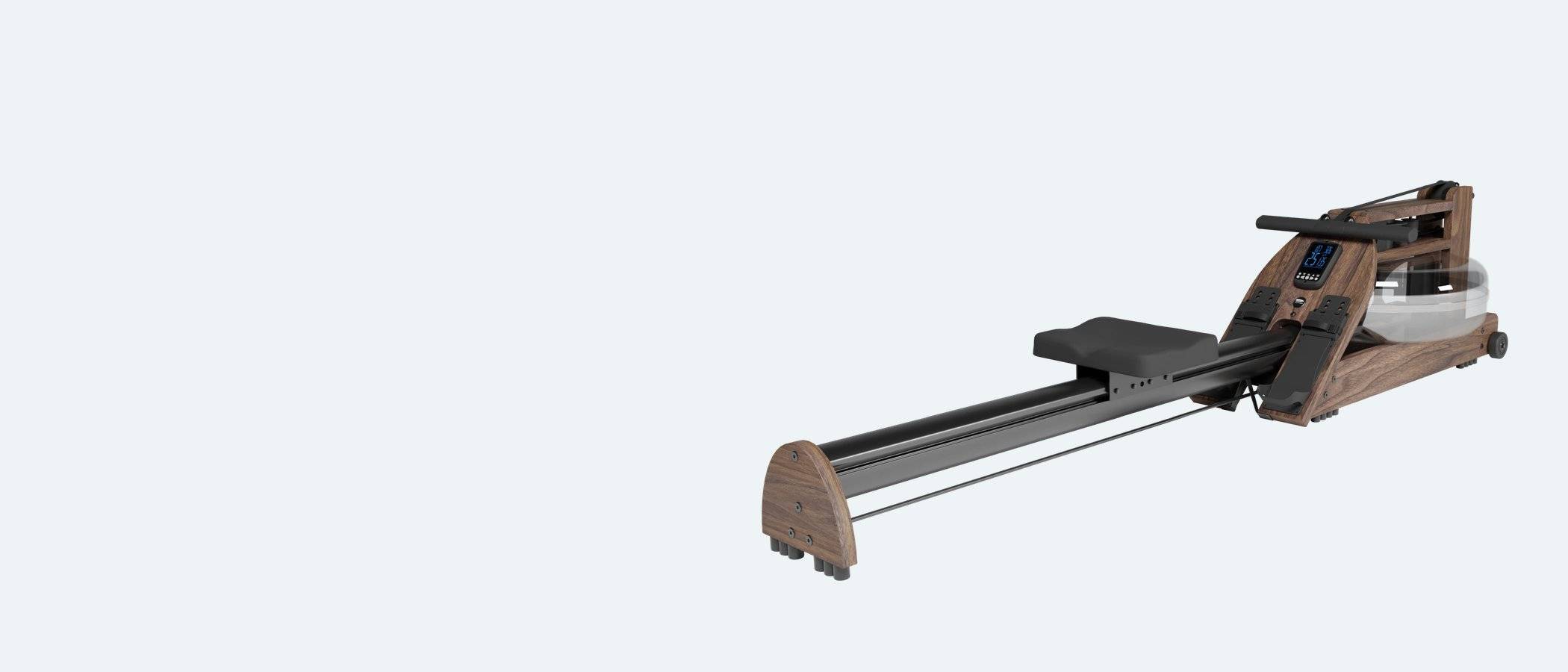
If you've been reading about the WaterRower A1, this is it. WaterRower has renamed its whole range, and the A1, sold over the years as the A1 Home, A1 Studio, A1 BLE, GX and CityRow Go among other names, is now the WaterRower Hybrid. It's the same idea it always was: a hardwood frame and water tank, with one aluminum rail for the seat instead of two wooden ones.
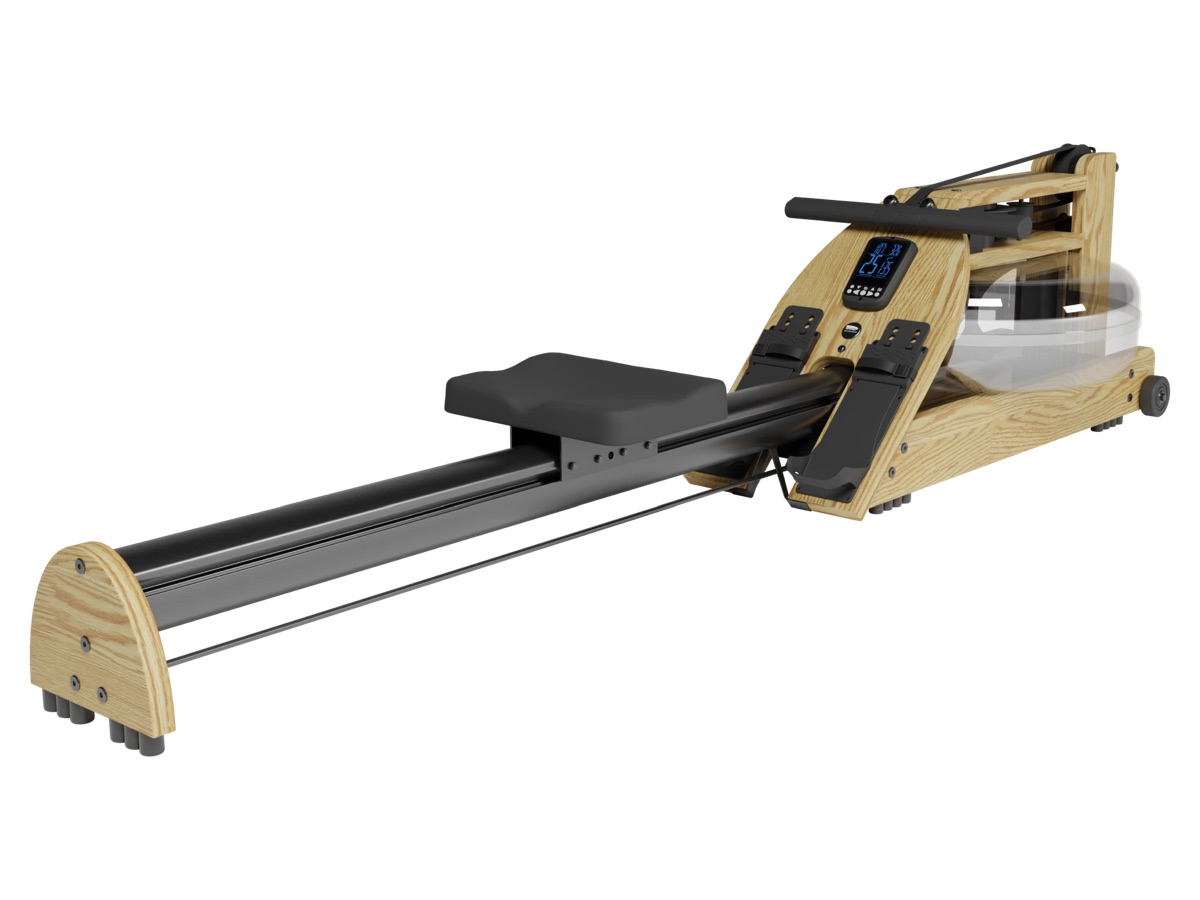
The Hybrid in oak: wooden frame and tank, one aluminum rail. Photo: WaterRower.
What has changed is the monitor. Many older A1s had a simple monitor with no Bluetooth, a common complaint in their owner reviews. Today's Hybrid comes with WaterRower's CR Bluetooth monitor, which is backlit, charges over USB and connects to apps. More on that below.
Hybrid vs Original: what's actually different
From the side, they look much alike. The differences are in the rail, the feet, who they fit and the monitor.
Hybrid
Original
Price in oak
$1,299
$1,199
Seat rail
One aluminum monorail
Two wooden rails
Foot position
Wider
Narrower, feet close together
Inseam up to
39 in
37 in ($100 XL rails for 38 in and over)
Max user
375 lb
700 lb
Seat height
11 in
12 in (20 in with the HiRise kit)
Monitor
CR Bluetooth: backlit, in the footboard, USB-charged
S4 Bluetooth: on the side, four AA batteries, more programs
Weight empty / filled
66.5 / 103.5 lb
63.5 / 100.5 lb
Stored upright
20 x 22.25 in of floor
17.25 x 22.25 in of floor
Warranty (registered)
5 yr frame, 3 yr parts
5 yr frame, 3 yr parts
Two things surprise people. The Hybrid isn't lighter than the Original, despite the metal rail: it's 3 lb heavier. And it takes much less weight, 375 lb against the Original's 700 lb. If you're a big rower, that settles it.
WaterRower Hybrid
WaterRower Original
Overall
3.8
4.0
Rowing feel
4.5
4.5
Build quality
4
4.5
Screen and app
3
3
Workouts and coaching
3.5
3.5
Fit and comfort
4
4
Living with it
4.5
5
Value for the price
3.5
4
Customer service
3.5
3.5
What rowing it is like
Exactly like a WaterRower, which is the point. It has the same WaterFlywheel water tank as the Original, so you get the same soft swoosh of water, the same smooth stroke with no harsh catch, and the same resistance that builds the harder you pull. Owners say the same things about it as they do about the Original: it's quiet, it's smooth and it's solid. In the reviews I read, I didn't find any owners complaining about the rail flexing or wobbling.
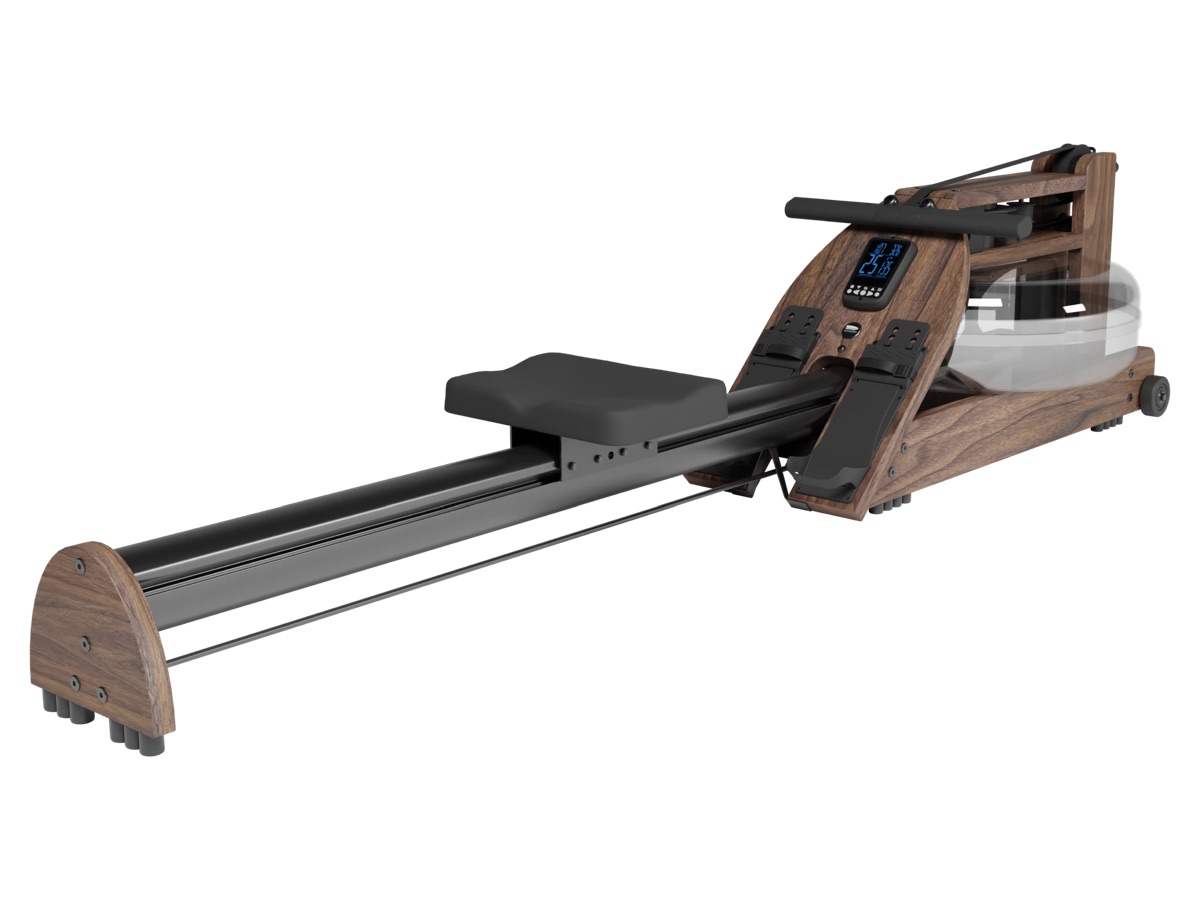
The Hybrid in walnut, with the CR monitor set into the footboard. Photo: WaterRower.
The feet. This is the real reason to buy one. On the Original your feet sit close together; several owners mention it, and a reviewer with bigger thighs found they rubbed. The Hybrid's single rail lets WaterRower set the footpads further apart, and it's noticeably more comfortable if that's a problem for you. If it isn't, you won't care either way.
The legs. The Hybrid fits inseams up to 39 inches as standard, two more than the Original. The Original can match it with XL rails, which add 4 inches for $100 and bring it to the same $1,299 in oak. So if you're tall but not wide, both work; the Original XL takes more weight and has the fuller monitor, the Hybrid gives your feet more room.
The seat. At 11 inches it's a little lower than the Original's 12, and there's no HiRise kit for the Hybrid, because the kit is made for the wooden twin rails. If getting up from a low seat is hard for you, buy the Original and add the HiRise.
The CR Bluetooth monitor
The Hybrid's monitor sits in the middle of the footboard rather than up on the side. It's backlit, so you can read it in a dim room, and it runs on a pack you charge over USB, so there are no AA batteries to buy. It shows your time, distance, stroke rate and pace per 500 meters, and you can set up time or distance intervals.
What it doesn't have is the S4's extra programs: WaterRower lists no heart-rate zones or advanced programs for it, and it doesn't list watts on its own screen. For most people that won't matter, because the real screen is your phone. The CR monitor connects over Bluetooth to the free WaterRower Connect app, which shows everything live, keeps your history and sends it to Strava and Apple Health, and to apps like CityRow and EXR.
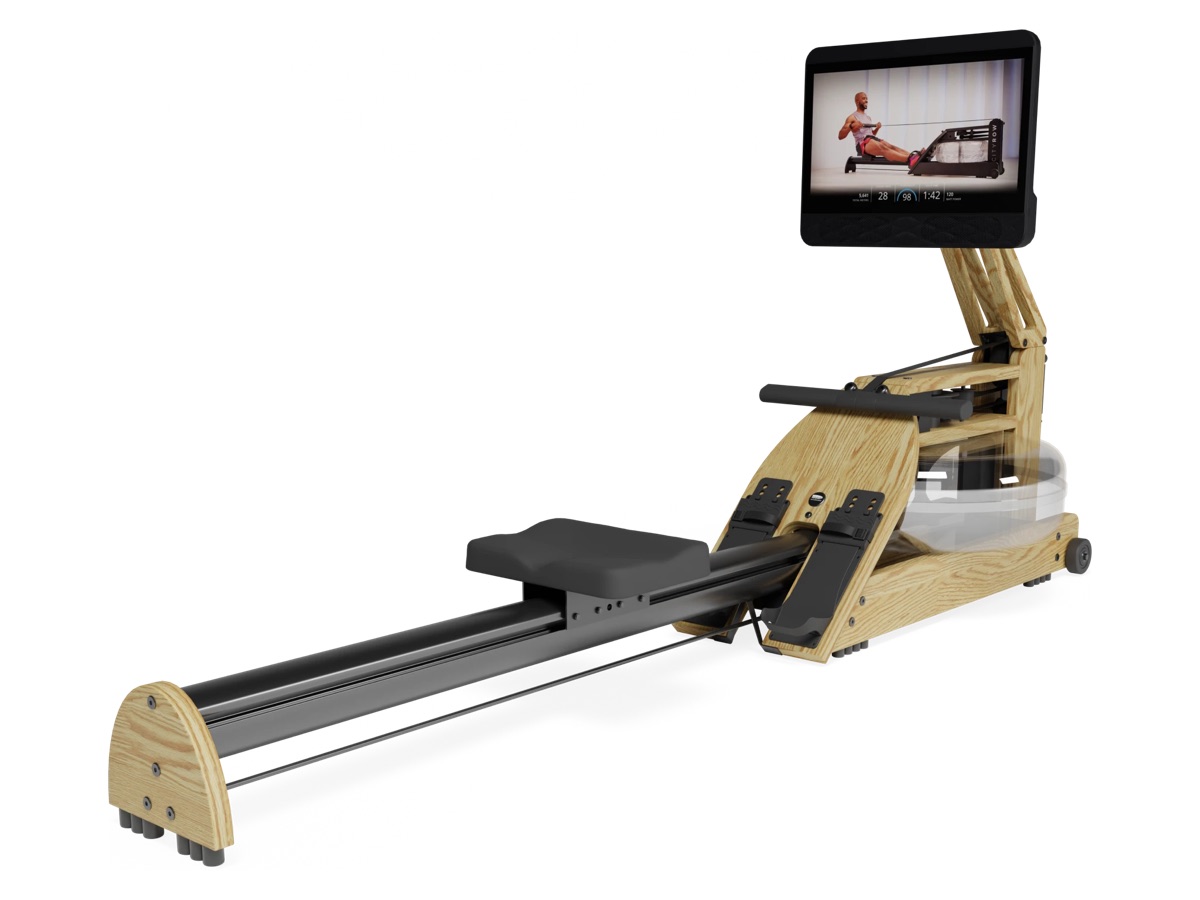
As on the Original, you can order the Hybrid with the PowerPulley (+$300), which measures the force of every stroke and shows it in the app, or the 19.5-inch CityRow touchscreen (+$500), with classes for $29 a month or $299 a year. Our WaterRower monitor and apps guide compares them all.
The Hybrid with the CityRow touchscreen, a $500 option. Photo: WaterRower.
Living with it
Like every WaterRower, it stands on its end full of water and rolls on two wheels, so it lives in a corner when you're not using it. It takes a little more floor than the Original stood up, 20 by 22.25 inches, and it's 82 inches tall. Owners like how compact it is and how easily it moves. Fold the device arm up before you stand it up: WaterRower says not to store it with the arm down or a tablet on it.
Filling is the other way round. On the Original you fill the tank with the rower lying flat. On the Hybrid you stand it upright to fill and lay it flat to empty. It's still 17 liters, still the siphon pump from a bucket on a chair, and still the job owners like least. Our set-up and care guide walks through it for both machines.
Care is the same as any WaterRower: a purification tablet every three to six months, the rail kept clean so the seat rolls smoothly, and an eye on the tank seam as the years go by. WaterRower sells a Hybrid care kit with a brush for the monorail.
Buying a used A1
Used A1s do come up for sale; the ones we saw on Craigslist were listed at $400 and $899. They're the same basic machine, with two things to check. First, the monitor: many older A1s have the simple monitor without Bluetooth, so it won't connect to apps; price that in, or look for a newer one with the CR Bluetooth monitor. Second, the tank: look for drips or stains where its two halves join, the most common long-term fault on any WaterRower. The warranty doesn't transfer, so a used one has none.
What other owners say
There are fewer owner reviews of the Hybrid and A1 than of the Original, mostly on Amazon and John Lewis. The patterns:
What owners love
Quiet and soothing, like every WaterRower
Compact upright storage, easy to move
Solid build
What owners complain about
The old A1 monitor, which on many A1s had no Bluetooth (today's CR monitor fixes this)
Filling the tank
Value: owners are more split on whether it's worth the money than on the Original
Warranty, returns and cost
The Hybrid has the same warranty as the Original: one year, rising to five years on the frame and three on parts if you register it within the first year. It covers parts but not labor, and it doesn't transfer. Returns are at WaterRower's discretion, you pay shipping both ways, and there may be a 15% restocking fee, so be sure before you order.
There's no subscription: the monitor and the WaterRower Connect app are free. In oak or Vintage it's $1,299; Shadow and Club are $1,399, Cherry $1,599 and Walnut $1,799, all at waterrower.com on 17 November 2026.
Should you buy the Hybrid?
I went in expecting the metal rail to make it a lesser WaterRower. It isn't: it rows the same, it sounds the same and it looks almost as good. What it is, is a WaterRower for a particular body. If your legs are long or your thighs are wide and the Original's footboard pinches, the Hybrid is worth the extra $100. If you're over 375 lb, or you want the higher HiRise seat, or nothing about the Original bothers you, buy the Original and keep the $100.
FAQ
Is the WaterRower Hybrid the same as the A1?
Yes. WaterRower now sells the A1 as the Hybrid. It's the same design, a hardwood frame and tank with an aluminum monorail, now with the backlit CR Bluetooth monitor.
What's the difference between the WaterRower Hybrid and the Original?
The Hybrid has one aluminum rail instead of two wooden ones, which gives a wider foot position and room for a 39-inch inseam. The Original takes riders up to 700 lb against the Hybrid's 375 lb, has the S4 monitor with more programs, and costs $100 less.
Does the WaterRower Hybrid have Bluetooth?
Yes. Its CR Bluetooth monitor connects to the free WaterRower Connect app and to apps like CityRow and EXR. Many older A1 monitors had no Bluetooth.
How much does the WaterRower Hybrid weigh?
66.5 lb empty and 103.5 lb with 17 liters of water in the tank, slightly more than the Original. It stands upright full of water in 20 by 22.25 inches of floor.
How tall can you be for the WaterRower Hybrid?
It fits inseams up to 39 inches, the longest of WaterRower's wooden models. The maximum user weight is 375 lb.