Black Friday rowing machine deals are on: Hydrow, Ergatta, NordicTrack and more. See the deals
Rowing machine review
WaterRower Review: We Rowed the Original and the Hybrid
By Sam Watson · Updated 17 November 2026
We earn a commission if you buy through the links on this page, at no extra cost to you.
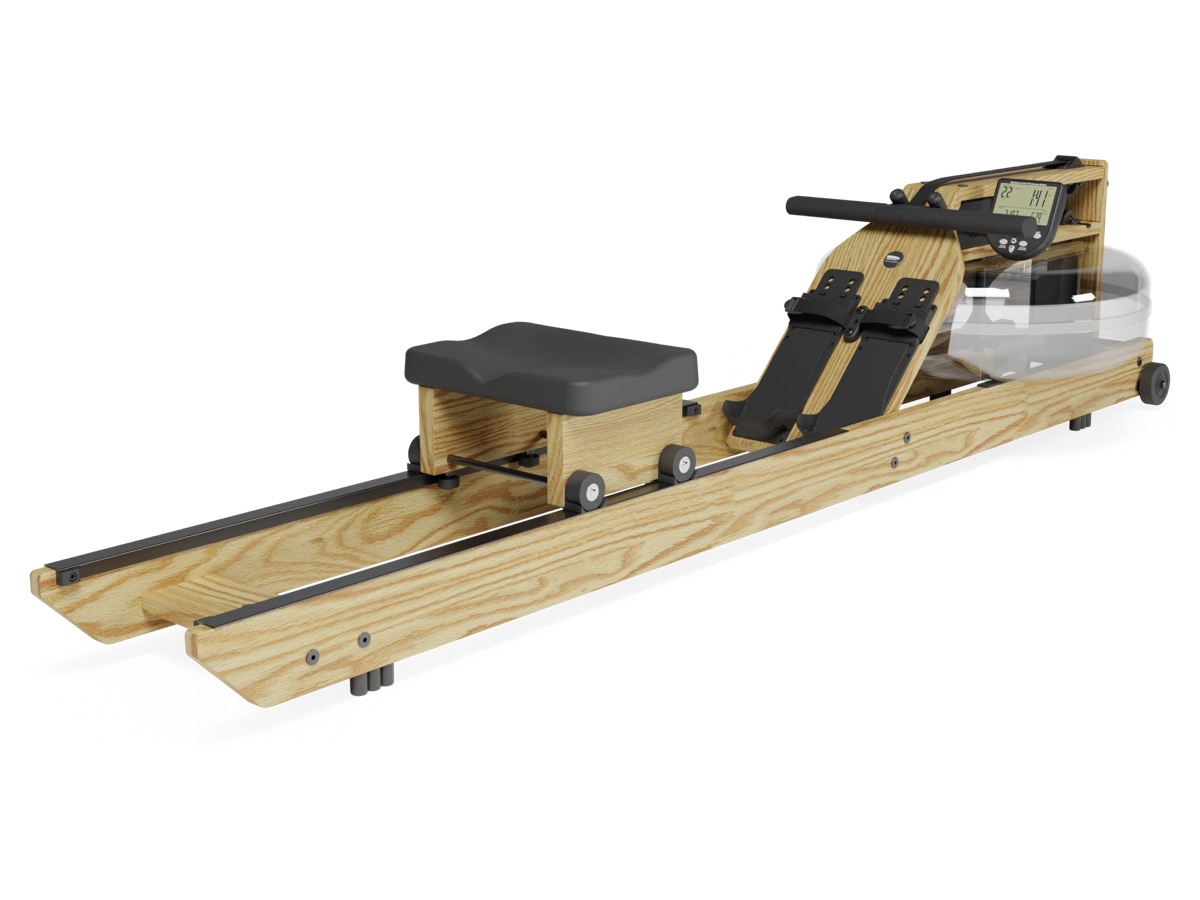
I used to think the WaterRower was a rowing machine for people who cared more about their living room than their training. It's made of wood, it costs more than a Concept2, and half the photos of it look like they're from a furniture catalog. Then I rowed one, and I understood why owners talk about it the way they do. It's the quietest, calmest rower I've been on that still feels like proper rowing, and it's the only one I'd happily leave out in a room people actually live in. It isn't the best machine for chasing times, and the monitor is basic. But for most people who want to row at home and want the machine to look good doing it, the WaterRower Original in oak is the one to buy.
The WaterRower to buy
WaterRower Original
$1,199Oak or Vintage with the S4 Bluetooth monitor at waterrower.com; Shadow and Club $1,299, Cherry $1,499, Walnut $1,699. PowerPulley +$300, CityRow touchscreen +$500, XL rails +$100
Price checked on 17 November 2026
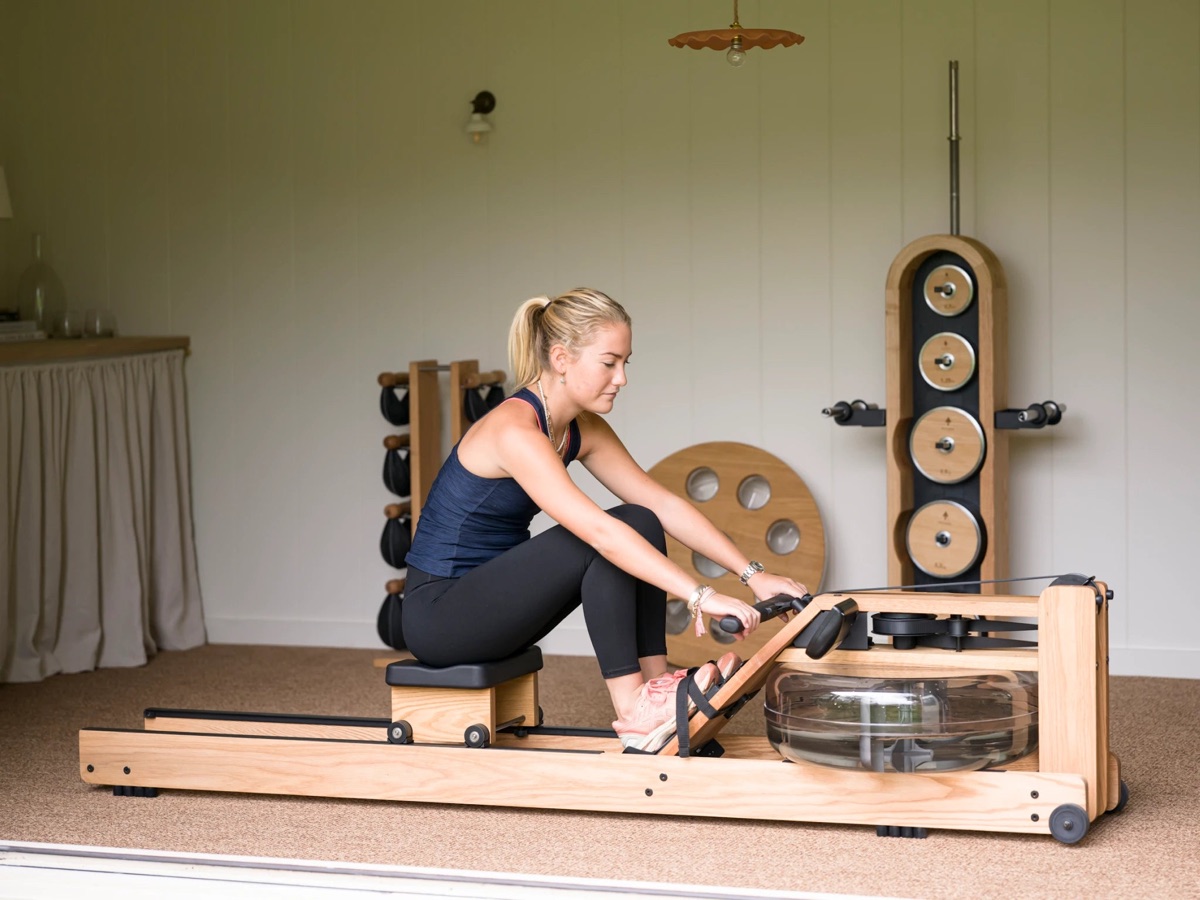
Best for: A living room: it looks like furniture, sounds like water and stands on end in a corner.
Solid hardwood frame in six finishes, made in Rhode Island
Water resistance that rises the harder you pull, with nothing to set
Stands upright full of water in the floor space of a chair
No subscription; the free WaterRower Connect app and others connect over Bluetooth
Resistance
Water (paddles in a sealed tank)
Footprint in use
82 x 22.25 in (209 x 57 cm); needs 8.5 x 3.5 ft to row
Storage
Stands upright with the water in: 17.25 x 22.25 in of floor, 81.5 in tall, on two wheels
Machine weight
63.5 lb empty, 100.5 lb filled to 17 liters
Max user weight
700 lb
Fits rowers
Inseams up to 37 in (XL rails, +$100, for 38 in and over); seat 12 in off the floor (20 in with the $150 HiRise adapter)
Monitor
S4 Bluetooth (four AA batteries): time, distance, stroke rate, split, watts, calories, zones and intervals. PowerPulley (+$300, app only) or 19.5-inch CityRow touchscreen (+$500) instead
Membership
None needed; WaterRower Connect is free, Premium optional; CityRow classes $29 a month with the touchscreen
Warranty
1 year; register within the first year for 5 years frame and 3 years parts. First owner only
What we like
Owners keep praising the look, the quiet and the sound of the water
Stands upright full of water in the floor space of a chair
Takes riders up to 700 lb, and spare parts are easy to get
Watch out for
Filling the tank with the siphon pump is slow and messy, owners say
The S4 is a plain LCD, and its watts depend on the tank volume you enter
The tank seam can start to leak after some years; a reseal kit or new tank fixes it
Buy the Original if you want a quiet rower that lives in the house rather than the garage, stands up in a corner and never asks you for a subscription. Oak or Vintage are the cheapest finishes, at $1,199.
Get the Hybrid instead if you have long legs (inseam over 37 inches) or you want your feet further apart. Not if you weigh more than 375 lb.
Skip WaterRower if you row for times and rankings, or you want a coach on a screen. A Concept2 is better for the first, a Hydrow for the second.
4.0out of 5
My scores: WaterRower Original
Out of 5, on the same scale as every machine we score. Value is judged against the price.
Rowing feel4.5
Smooth and natural with no harsh catch; you change the feel only by adding or draining water.
Build quality4.5
Solid American hardwood rated to 700 lb; a few owners report tank seals or brackets failing.
Screen and app3
The S4 is a plain side-mounted display, and its watts depend on the tank volume you enter, so numbers don't compare with a Concept2.
Workouts and coaching3.5
Free WaterRower Connect races, cheap Premium classes, and apps like CITYROW, EXR and Kinomap.
Fit and comfort4
Takes 700 lb, the most of any home rower, but inseams only to 37 in and the 12-inch seat is low.
Living with it5
Quiet, looks like furniture and stands upright full of water in the space of a dining chair.
Value for the price4
$1,199 with no subscription, but $209 more than a Concept2 for a basic monitor and weaker resale.
Customer service3.5
5-year frame cover only if you register it in year one, and it doesn't transfer; replies can be slow.
Why people fall for it
Most rowing machines are gym equipment you put up with. The WaterRower is the one people buy because they like having it around. It's solid hardwood, made in Rhode Island, and the resistance comes from paddles spinning in a tank of water, so every stroke makes a soft whoosh rather than a fan's roar or a motor's hum. WaterRower has made it since 1988, and the design has been recognized by MoMA in New York and London's Design Museum.
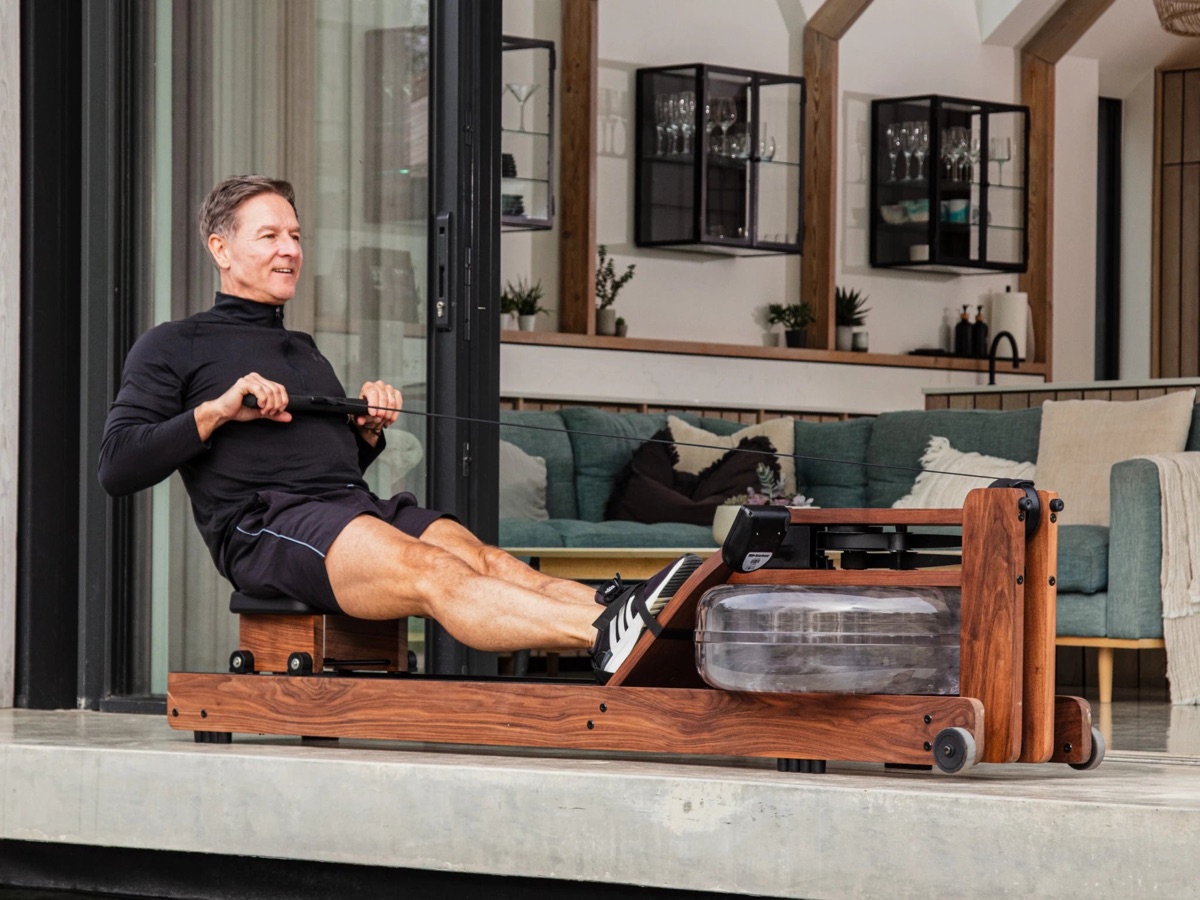
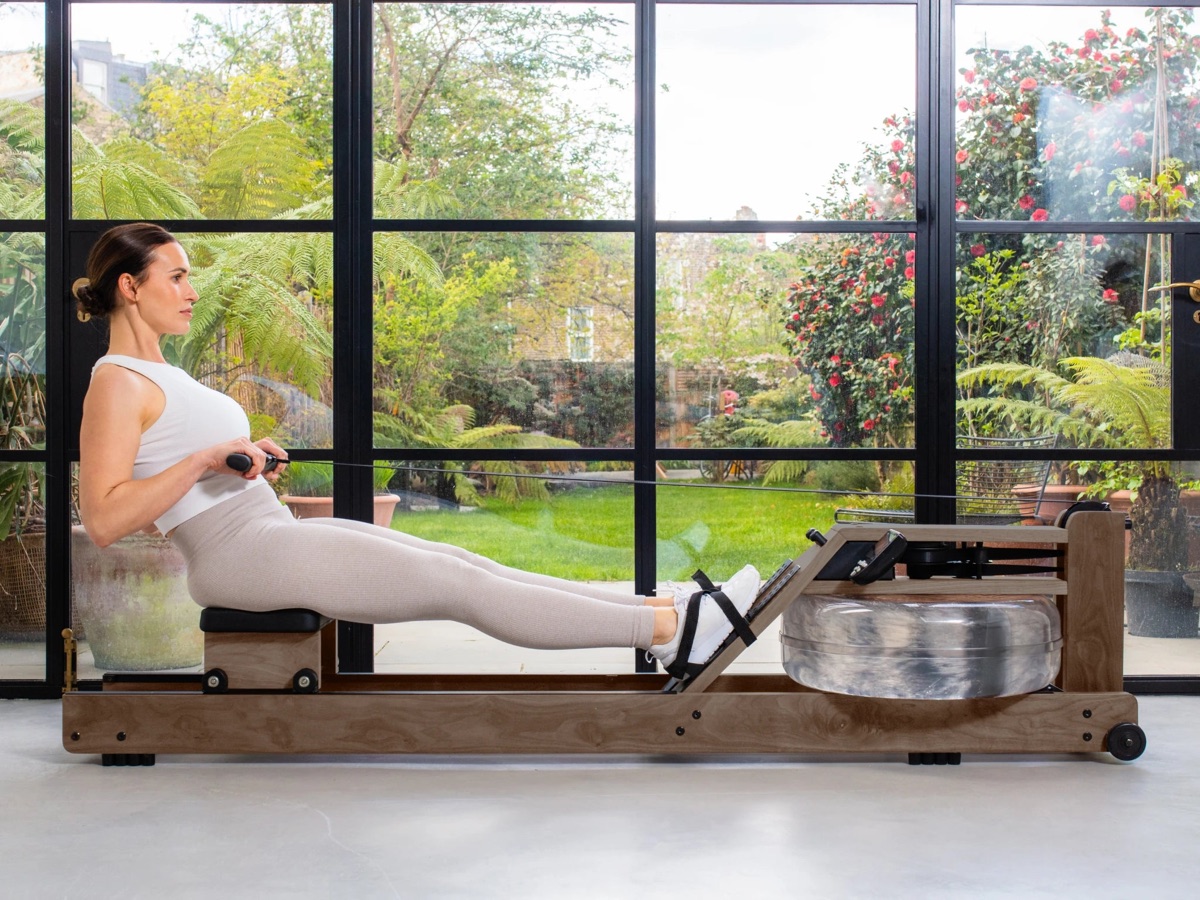
A walnut Original in a living room: the reason most people buy one. Photo: WaterRower.
That's also why it costs what it does. At $1,199 in oak it's $209 more than a Concept2 RowErg, and you're paying partly for the wood and the hand finishing. Whether that's worth it depends on where it's going to live. In a garage, I'd buy the Concept2. In a living room, a bedroom or an apartment, the WaterRower earns its price every time you walk past it.
Getting it home
WaterRower ships within five to seven business days, and the Original comes partly built. It's about 64 lb before the water goes in, so it's nothing like the 200 lb crate some smart rowers turn up in.
Assembly took me about 40 minutes, which is right in the 30 to 45 minutes WaterRower says: rails, seat, tank, footboard, footpads and wheels, with the two Allen keys from the box. The one fiddly part is the footboard. Several owners say the holes are hard to line up, and the fix that worked for me is to put every bolt in loosely and only tighten them once they're all in.
A handful of owners report a dented rail or a cracked tank from the courier, so check everything when it arrives: WaterRower wants damage reported within 24 hours. The full build, with the steps and what to check in the first month, is in our set-up and care guide.
Filling the tank: the job nobody enjoys
Here's the bit the brochure skips. Before you can row, you have to put about 17 liters of water into the tank, and one of the most common complaints from owners is that the little siphon pump in the box makes this slow and messy. My first fill took longer than building the thing.
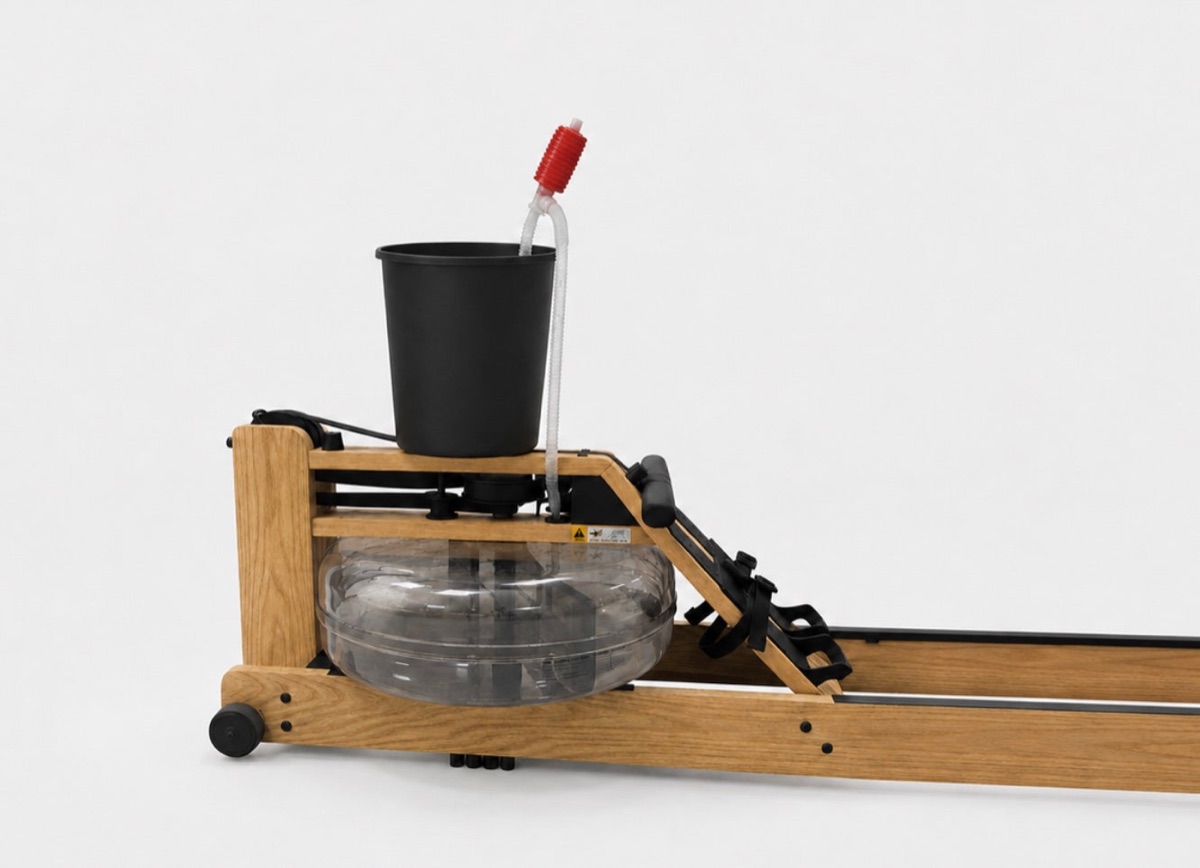
The siphon pump that comes in the box: the bucket has to sit higher than the tank. Photo: WaterRower.
The way to make it painless: lay the rower flat, take out the stopper, put a bucket on a chair so it's higher than the tank, and let the pump do the work. Or skip the bucket and use a hose if it'll reach. Fill to 17 on the sticker on the side of the tank, drop in one of the purification tablets from the box, put the stopper back and wipe any drips off the wood. You do it once, and after that it's done for years.
Don't fill it past 19, the top of the gauge, and don't expect more water to make it harder: WaterRower says the level changes how heavy the "boat" feels, not how hard the session is. Leave it at 17; I never felt the need to change it.
The first thing you notice is the sound. It's a steady swoosh of water with every stroke, rising and falling as you row, and it's genuinely relaxing in a way no other machine I've used is. Owners say it more than anything else: it's quiet, and the sound is part of why they keep rowing.
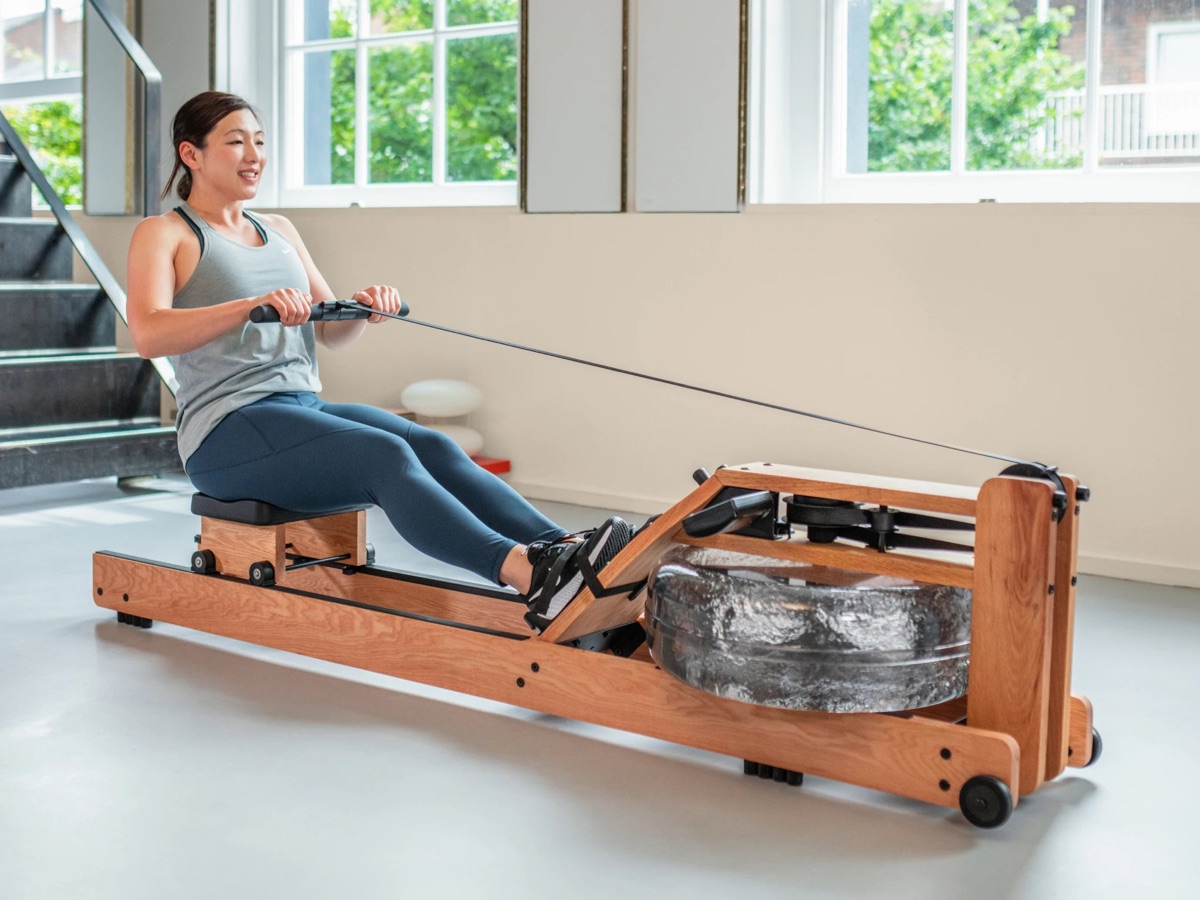
The catch on an oak Original. The resistance picks up as soon as you push with your legs. Photo: WaterRower.
The stroke is smooth from start to finish, with no harsh bite at the catch. The resistance builds the harder and faster you pull, the way a boat does, so there's no dial to set and nothing to adjust between pieces: if you want more, you pull harder. Coming from a Concept2, it feels a little lighter and softer at the front of the stroke. Most of the time I love that. On very hard intervals, I prefer the Concept2's crisper catch.
Your numbers won't match a Concept2. WaterRower's monitor works out watts from the tank volume you tell it, and owners and reviewers who row both find their WaterRower times read faster. That's fine for tracking your own progress, but don't compare a WaterRower 2k with a friend's Concept2 2k. If times against other people matter to you, that's a reason to buy the Concept2.
The seat and the feet. The seat is shaped and comfortable, and owners rarely complain about it, unlike the Concept2's. It's low, though: 12 inches off the floor, and reviewers point out that's a long way down if getting up is hard for you. WaterRower's HiRise adapter lifts it to 20 inches, from $150. The other thing I noticed in the first week is that your feet sit quite close together. Most people stop noticing within a few sessions, but several owners mention it, and a reviewer with bigger thighs found they rubbed. The Hybrid fixes that with a wider foot position.
What I row on it. The water suits steady rowing best: long, even sessions where you settle into the sound and stop watching the clock. That's what I'd use it for most, with intervals like 8 x 500 meters once a week, where you feel the water push back harder the faster you drive. And it's the rower other people in the house will actually use: nobody leaves the room because of the noise.
Which wood should you choose?
Every Original is the same machine, with the same tank, rails, seat and monitor. The only thing the finish changes is how it looks and what it costs. So pick the one you like looking at, and if you can't decide, oak or Vintage save you $500 over walnut.
Finish
What it is
Price with S4 Bluetooth
Oak
Northern red oak, hand-rubbed with Danish oil: the classic light WaterRower
$1,199
Vintage
Hardwood with a warm vintage oak stain
$1,199
Shadow
Hardwood with a black stain (once called Black)
$1,299
Club
Hardwood with a two-tone rose and black stain
$1,299 (sold out in the US when we checked)
Cherry
American black cherry, which darkens to a deeper red with light over time
$1,499
Walnut
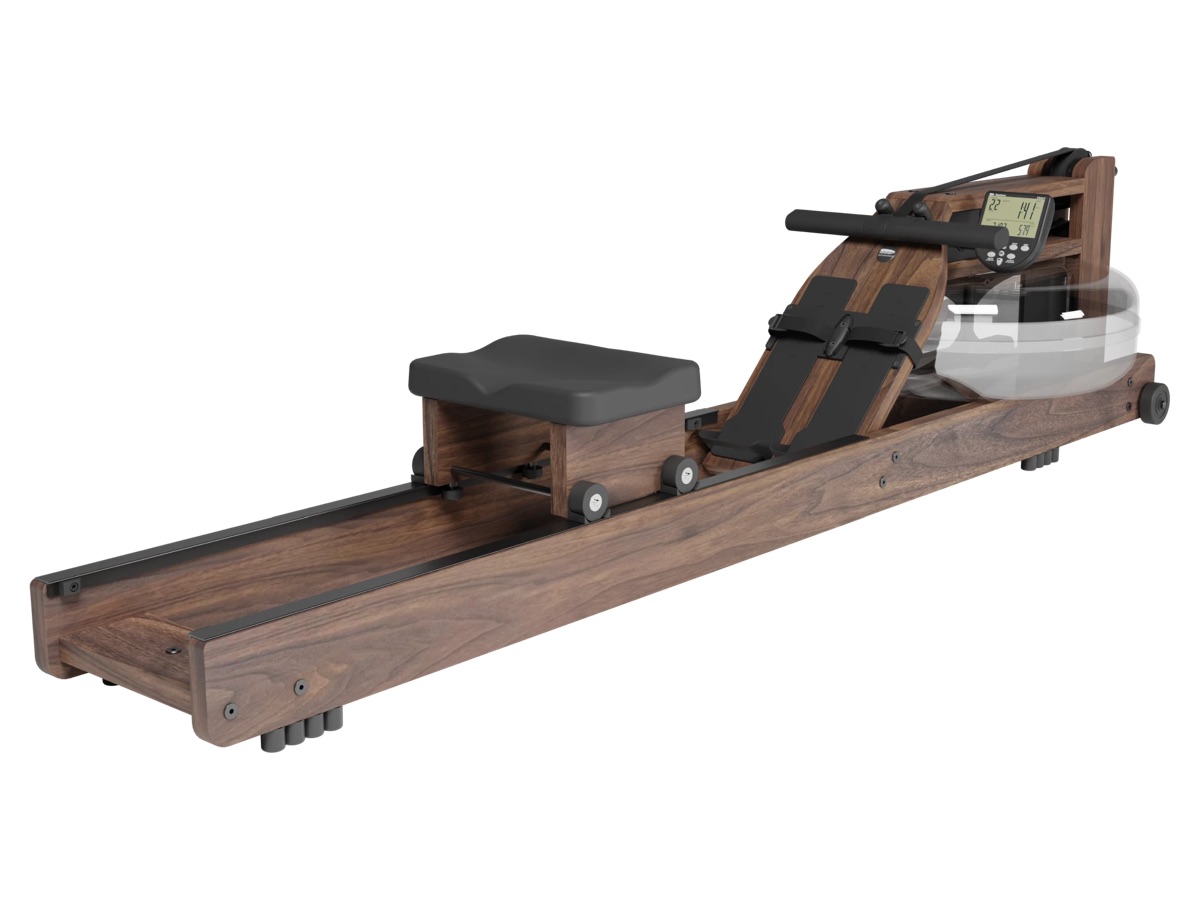
Black walnut, hand-rubbed with Danish oil
$1,699
Prices are at waterrower.com on 17 November 2026. XL rails for very tall rowers add $100 to any finish.
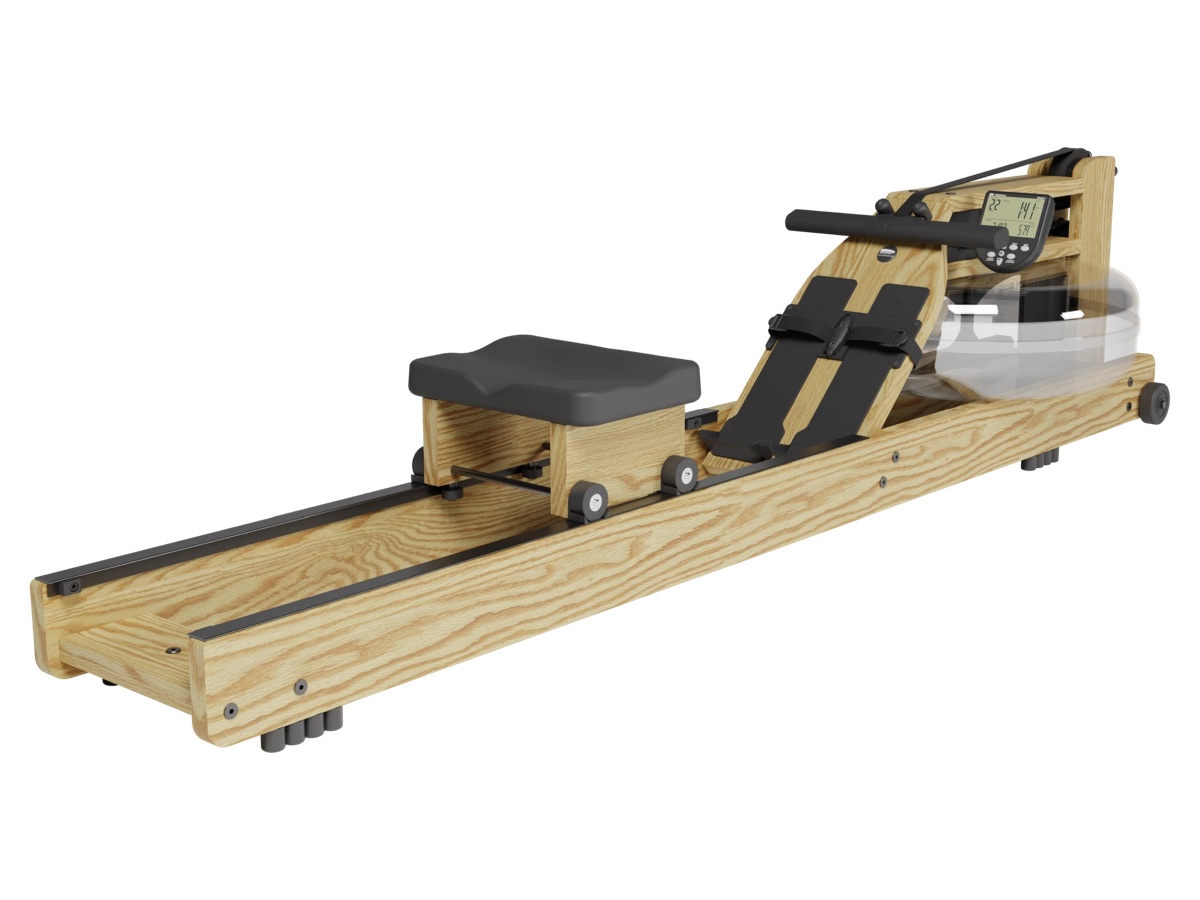
Oak, $1,199.
Cherry, $1,499.
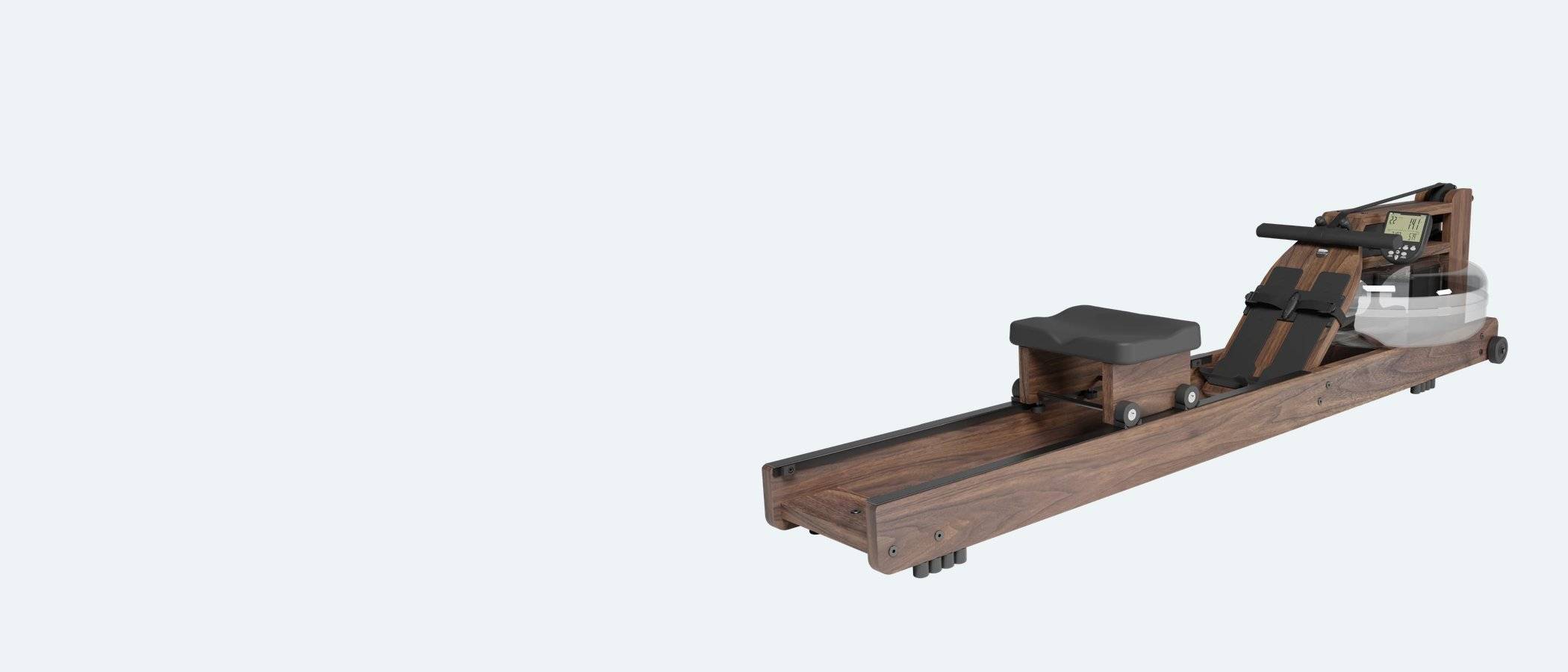
Walnut, $1,699.
Natural, Club, Oxbridge, Classic: what the old names mean
If you've been searching, you've probably found reviews of the WaterRower Natural, Club, Oxbridge and Classic, and wondered which to buy. You can't buy any of them under those names now, because they were never really different machines. They were the same rower in different woods, and WaterRower has since renamed everything.
Classic is today's Walnut Original.
Oxbridge is today's Cherry Original.
Natural was the Original in ash. Ash is discontinued, so there's no direct replacement; oak is the nearest light wood.
Club is still sold as the Club finish.
The Series IV or S4 is the Original's old name, the A1 (A1 Home, A1 Studio) is now the Hybrid, the VR3 is now the Lite, and the M1 is now the Metallic.
So a used Classic or Oxbridge is the same machine WaterRower sells today in walnut or cherry, and it's a perfectly good buy. Wooden S4 WaterRowers were mostly listed at $400 to $750 on Craigslist when we looked. Two things to know: the warranty doesn't pass to a second owner, and check the tank for drips where its two halves join (more on that below). WaterRower still sells spare parts in the old woods.
Original, Hybrid, Lite or Metallic?
WaterRower now makes four rowers. For most people the Original is the right one, but the others each make sense for someone.
Original
Hybrid
Lite
Metallic
From
$1,199
$1,299
$999
$1,899
Frame
Hardwood, two wooden rails
Hardwood with an aluminum monorail
Thinner red oak, two rails
Aluminum
Finishes
Six
Six
Oak only
Black or silver
Max user
700 lb
375 lb
325 lb
700 lb
Inseam up to
37 in (XL rails for longer)
39 in
36 in
40 in
Seat height
12 in (20 with HiRise)
11 in
11.5 in
10 or 20 in
Monitor
S4 Bluetooth
CR Bluetooth, backlit
S4, no Bluetooth
S4 Bluetooth
Warranty (registered)
5 yr frame, 3 yr parts
5 yr frame, 3 yr parts
3 yr frame, 2 yr parts, home only
5 yr frame, 3 yr parts
WaterRower Original
WaterRower Hybrid
Overall
4.0
3.8
Rowing feel
4.5
4.5
Build quality
4.5
4
Screen and app
3
3
Workouts and coaching
3.5
3.5
Fit and comfort
4
4
Living with it
5
4.5
Value for the price
4
3.5
Customer service
3.5
3.5
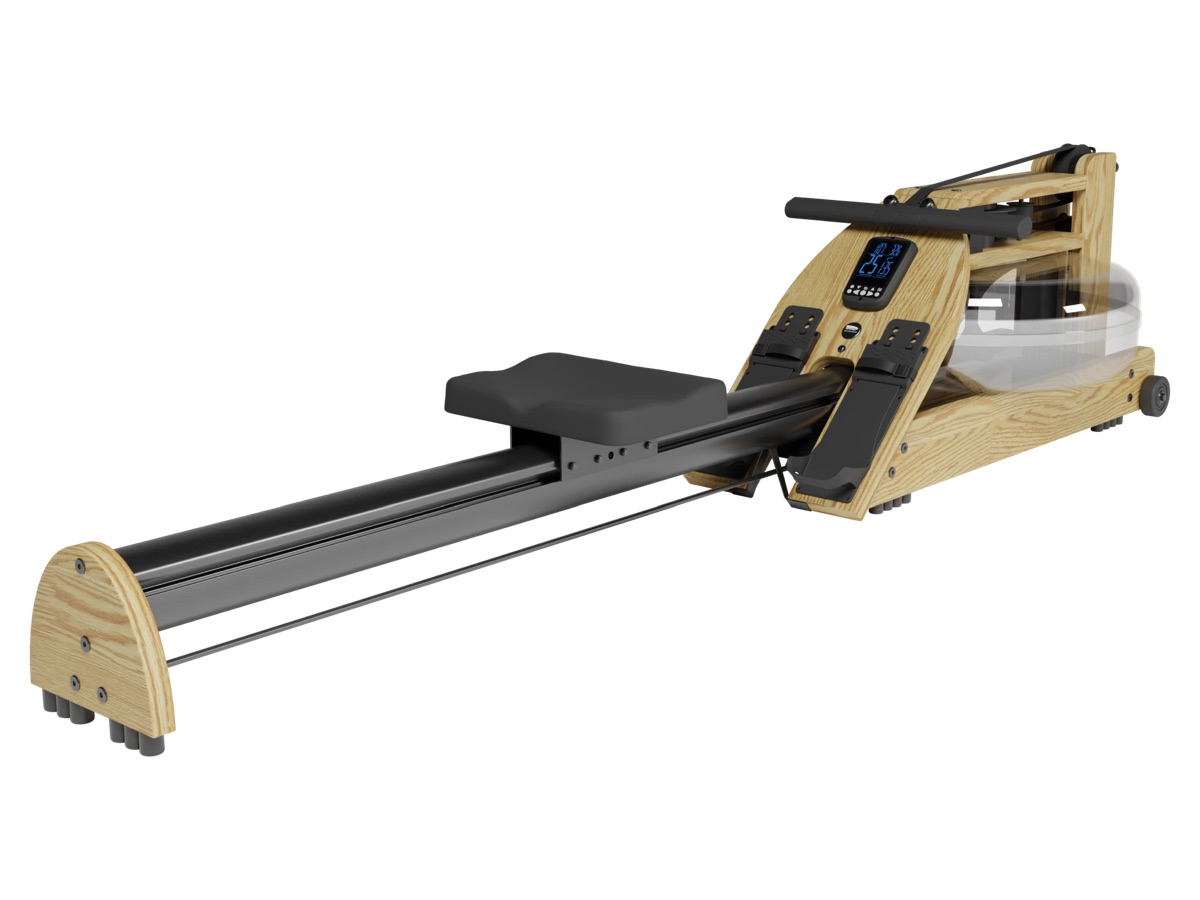
The Hybrid (until recently the A1) is the same wood and water with a single aluminum rail down the middle. That gives you a wider foot position and room for a 39-inch inseam, and its monitor is backlit and charges over USB. The catch is a 375 lb limit and a simpler monitor, for $100 more. Buy it if you have long legs or wide thighs. Our Hybrid review goes into it properly.
The Lite is the cheapest way into a wooden WaterRower, at $999 in oak. The wood is slimmer, it's about 23 lb lighter, and the limits come down to 325 lb and a 36-inch inseam. Its S4 monitor has no Bluetooth unless you add WaterRower's $100 ComModule, and the warranty is shorter and for home use only. It's new enough that we couldn't find owner reviews yet, so for now I'd spend the extra $200 on the Original, which also lets you use the free app straight away.
The Metallic (once the M1) is the commercial one, in powder-coated aluminum, made for gyms and studios. The HiRise version has a 20-inch seat. Unless you're kitting out a gym, or you want the HiRise height without adding a kit, the Original does the same job at home for less.
The S1 isn't sold in WaterRower's US or UK shop any more.
For long legs
WaterRower Hybrid
$1,299Oak or Vintage with the CR Bluetooth monitor at waterrower.com; Shadow and Club $1,399, Cherry $1,599, Walnut $1,799. PowerPulley +$300, CityRow touchscreen +$500. Formerly the A1
Price checked on 17 November 2026
Best for: Long-legged rowers and anyone who wants their feet further apart, in the same wood and water as the Original.
Hardwood frame with an aluminum monorail, in six finishes
Fits inseams up to 39 in, the longest of the wooden WaterRowers
Wider foot position than the Original
Backlit monitor in the footboard on a rechargeable pack
Resistance
Water (paddles in a sealed tank)
Footprint in use
82.25 x 22.25 in (209 x 57 cm); needs 8.5 x 3.5 ft to row
Storage
Stands upright with the water in: 20 x 22.25 in of floor, 82.25 in tall, on two wheels
Machine weight
66.5 lb empty, 103.5 lb filled to 17 liters
Max user weight
375 lb
Fits rowers
Inseams up to 39 in; seat 11 in off the floor; no HiRise or XL rail options
Monitor
CR Bluetooth, backlit, set into the footboard (USB-charged pack): time, distance, stroke rate, split, intervals. PowerPulley (+$300, app only) or 19.5-inch CityRow touchscreen (+$500) instead
Membership
None needed; WaterRower Connect is free, Premium optional; CityRow classes $29 a month with the touchscreen
Warranty
1 year; register within the first year for 5 years frame and 3 years parts. First owner only
What we like
The same quiet, smooth water stroke owners love on the Original
Fits inseams up to 39 in, with a wider foot position
No batteries to buy: the monitor charges over USB
Watch out for
Takes riders up to 375 lb, against 700 lb on the Original
$100 more than the Original in oak, with a simpler monitor
Owners are more split on value than on the Original
$999Oak only, with the S4 monitor (no Bluetooth) at waterrower.com; $1,099 with the ComModule for Bluetooth
Price checked on 17 November 2026
Best for: The cheapest wooden WaterRower, for lighter riders who are happy to row without an app.
Solid red oak frame, made in Rhode Island
40 lb empty, the lightest WaterRower
Stands upright full of water
S4 monitor with intervals; Bluetooth with the $100 ComModule
Resistance
Water (paddles in a sealed tank)
Footprint in use
81.5 x 22.25 in (208 x 57 cm); needs 8.5 x 3.5 ft to row
Storage
Stands upright with the water in: 17.25 x 22.25 in of floor, 81.5 in tall
Machine weight
40 lb empty, 77 lb filled to 17 liters
Max user weight
325 lb
Fits rowers
Inseams up to 36 in; seat 11.5 in off the floor
Monitor
S4 (four AA batteries): time, distance, stroke rate, split, watts, calories. Bluetooth only with the $100 ComModule
Membership
None needed
Warranty
1 year; register within the first year for 3 years frame and 2 years parts. Home use only. First owner only
What we like
$200 less than the cheapest Original
The lightest WaterRower to tip up and move
Watch out for
No Bluetooth unless you add the $100 ComModule
Oak only, thinner timber, lower limits (325 lb, 36 in inseam)
Too new for owner reviews, and a shorter, home-only warranty
The monitor, and what you get free
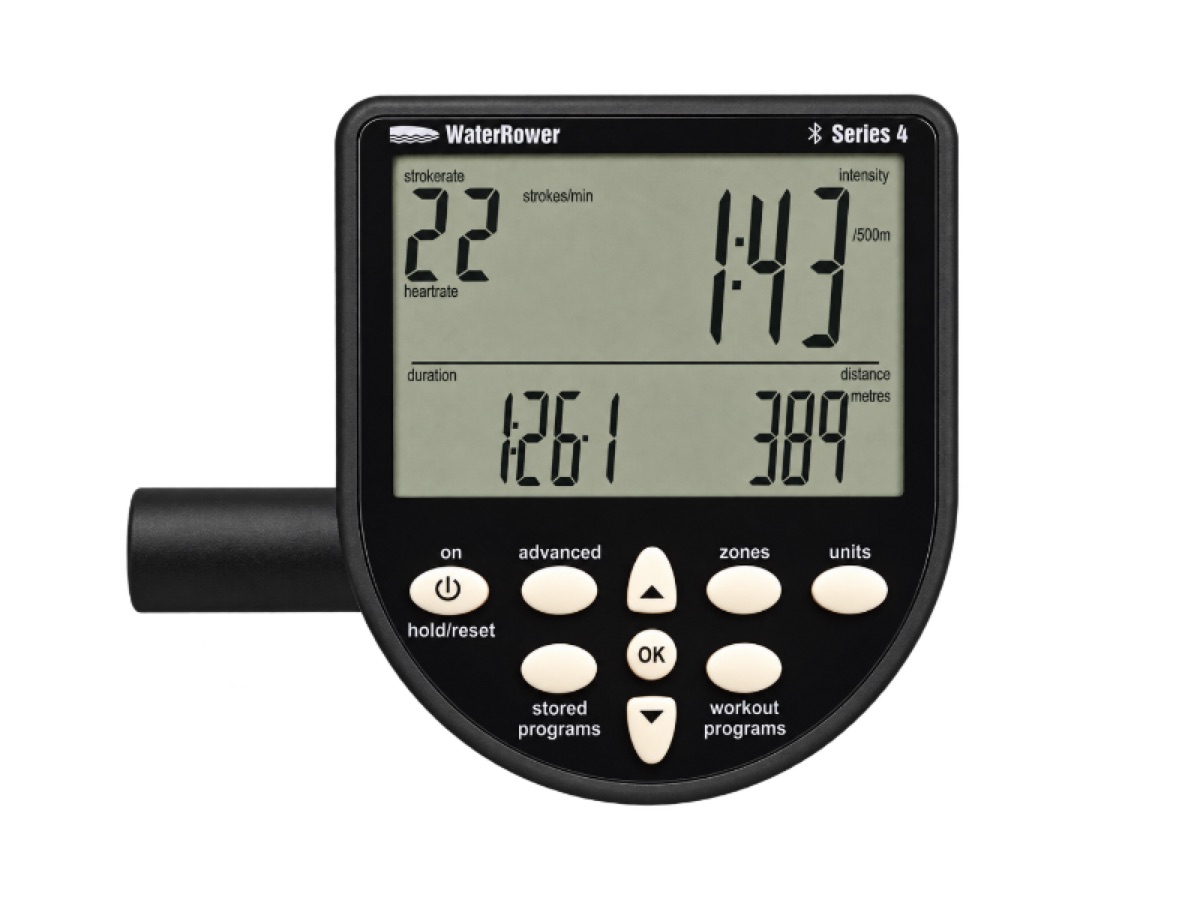
The Original comes with WaterRower's S4 Bluetooth monitor, and this is where the WaterRower shows its age. It's a plain LCD on four AA batteries. It shows what you need (time, distance, stroke rate, your pace per 500 meters, watts and calories) and it can run intervals and heart-rate zones, but owners and reviewers keep calling it basic, and they're right. It's the WaterRower's weakest point.
The S4 Bluetooth: clear, basic, on four AA batteries. Photo: WaterRower.
Connect your phone, though, and it gets much better. The free WaterRower Connect app shows your session live, lets you race other rowers, keeps your history and sends your workouts to Strava and Apple Health. Its Premium tier adds instructor-led classes and training plans for $50 to $60 a year. The S4 also works with apps like CityRow, EXR, Kinomap and Peloton's app.
When you order, WaterRower offers two upgrades. The PowerPulley (+$300) measures the force of every stroke and shows it through the app on a phone or tablet, with no screen of its own. The CityRow touchscreen (+$500) is a 19.5-inch screen on a wooden arm, with live and on-demand classes for $29 a month or $299 a year. Start with the S4 and the free app; you can add the touchscreen later as a kit if you find you want classes.
Everything about the monitors, the apps, what each costs and how to upgrade an old WaterRower is in our WaterRower monitor and apps guide.
Living with it
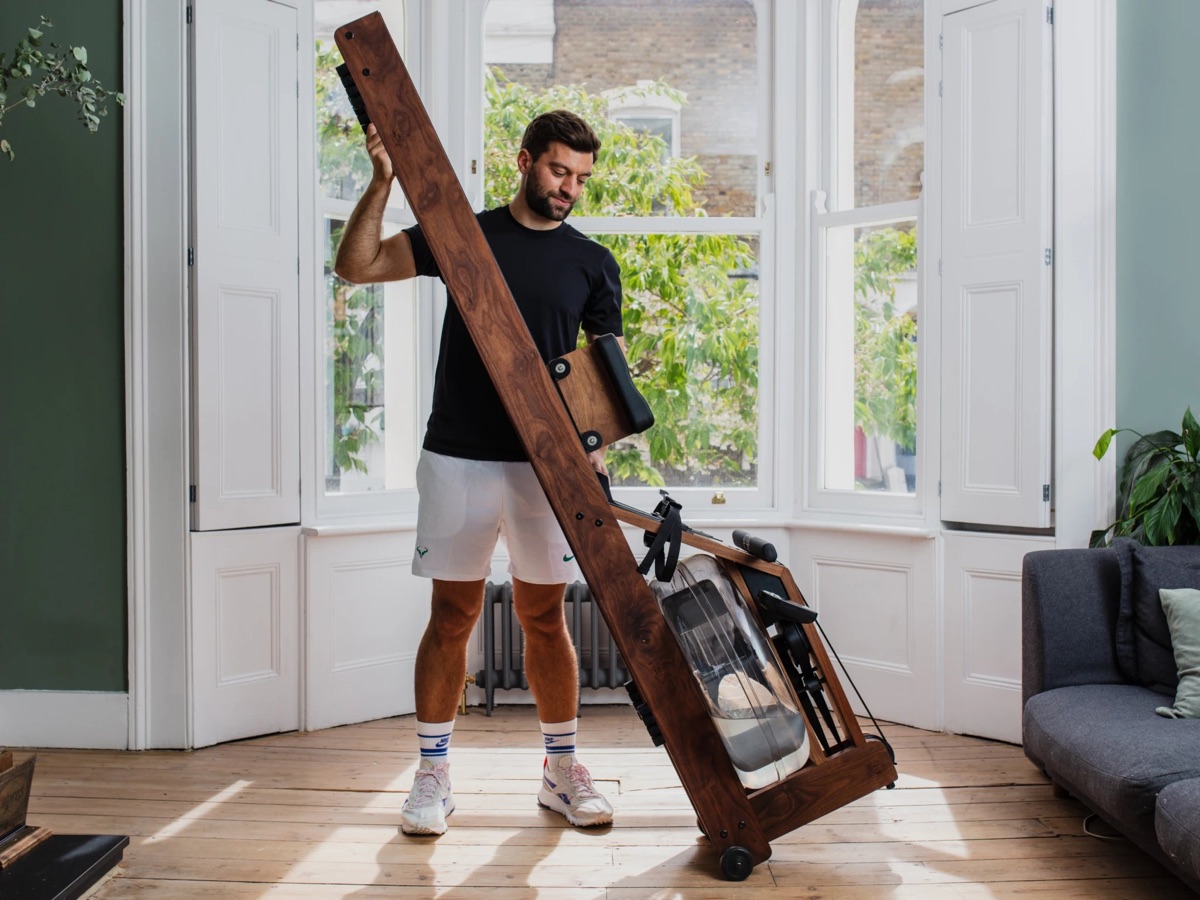
This is where the WaterRower wins. When you're done, slide the seat forward, tip it up on its end and roll it into the corner, full of water, where it takes up about as much floor as a dining chair. Owners mention it constantly: it stands up easily, it's stable, and it looks fine standing there.
Slide the seat forward and tip it up: it stores full of water in about 17 by 22 inches of floor. Photo: WaterRower.
The noise. It isn't silent. You hear the water and the seat on the rails, and it's louder at a hard sprint than a gentle paddle. But it's a soft, even sound, and owners in apartments say their neighbors don't hear it. It's much quieter than a Concept2, and the sound is pleasant rather than annoying, which matters more than the volume.
Looking after it. There's very little to do. Drop in a purification tablet every three to six months to keep the water clear (WaterRower sends them free if you ask), wipe the rails now and then so the seat rolls smoothly, and dust the belt. The wood needs nothing but the occasional dust.
The one thing that goes wrong. The tank is made in two halves, and the most common long-term fault owners report is the seam starting to weep after some years. It isn't the end of the machine: WaterRower sells a tank glue kit ($100) to reseal it, which some owners say was easier than they expected, or a new tank for $475. Owners describe machines going ten or fifteen years, some with one reseal along the way, and spare parts are easy to get. Our care guide covers spotting a leak early.
A Vintage Original: one of the two cheapest finishes, at $1,199. Photo: WaterRower.
What it really costs
Like a Concept2, a WaterRower costs you once. There's no subscription, and the free app does more than most people need.
Machine
Five years of fees
Total
WaterRower Original (oak)
$1,199 plus shipping
$0 (or $250 to $300 with Connect Premium)
About $1,200 plus shipping
Concept2 RowErg
$990 + $55 shipping
$0
About $1,045
Hydrow Origin
$2,195
$3,000 ($50 a month)
$5,195
Where it loses to the Concept2 is resale. A used Concept2 sells for most of its new price; used wooden WaterRowers were mostly listed at $400 to $750 when we looked, against $1,199 new. Add the CityRow touchscreen and its $29 a month and the sums change completely, so decide whether you want classes before you pay for the screen.
What other owners say
I went through the owner reviews: Amazon's ratings for the Original in oak and ash, 89 reviews on John Lewis in the UK, Trustpilot, and owner forums. These are the things lots of owners say, not one-offs.
What owners love
The quiet and the sound of the water, by far the most praised thing
How it looks: owners call it furniture, not gym kit
The smooth, natural stroke
Standing it up in a corner
How solid it feels, with machines going ten years and more
What owners complain about
The basic S4 monitor
Filling the tank with the siphon pump
The tank seam leaking after some years
Feet close together, and a footboard that's fiddly to line up when you build it
Customer service: mostly praised lately, with slow replies in some reports
That matches what I found. The things people love are the reasons to buy it, and the complaints are a monitor you can work around with your phone and a filling job you do once.
Warranty and returns
Register it. Out of the box, every WaterRower has a one-year warranty. Register it with WaterRower within the first year and the Original goes up to five years on the frame and three years on parts. A couple of owners report the registration not going through, so check you get a confirmation. The warranty covers parts, not labor, and it doesn't transfer to a second owner.
Returns are where WaterRower is weaker than most. There's no home trial. Returns are at WaterRower's discretion, you pay shipping both ways, and it may charge a 15% restocking fee. So be sure before you order: if you can, try one at a gym or a friend's house first.
WaterRower vs the alternatives
Concept2 RowErg ($990): cheaper, better for training and racing, numbers that compare with every gym in the world, and it holds its value. But louder, and it looks like gym kit. WaterRower vs Concept2
Ergatta: WaterRower builds the Ergatta for Ergatta, with a screen of races and games on top, for a monthly fee. Ergatta vs WaterRower
Hydrow ($2,195 plus $50 a month): near-silent too, with coached classes filmed on real water, but it costs four times as much over five years and needs Wi-Fi and a plug. Our Hydrow review
Our full ranking is in the best rowing machines, where the WaterRower Original is our pick for a water rower.
Should you buy a WaterRower?
I started out thinking the WaterRower was for people who care more about their furniture than their fitness. I was half right: it is beautiful, and that is a big part of why people buy it. What I didn't expect is how much the quiet and the sound of the water make you want to get on it. A rower that lives in your living room and that you enjoy using gets used. A better-measured one in a cold garage often doesn't.
If that sounds like you, buy the Original in oak or Vintage, register the warranty the day it arrives, and download the free app. If you've got long legs or wide thighs, look at the Hybrid. And if you mostly want to know your 2k, buy the Concept2 and don't look back.
FAQ
What happened to the WaterRower Natural, Club, Oxbridge and Classic?
They were the same machine in different woods, now sold as the WaterRower Original. The Classic is today's Walnut, the Oxbridge is Cherry and Club is still a finish. The Natural was ash, which WaterRower no longer makes.
How much is a WaterRower?
From $999 for the Lite to $1,899 and up for the commercial Metallic. The Original costs $1,199 in oak or Vintage, rising to $1,699 in walnut, at waterrower.com in November 2026.
Is a WaterRower worth it?
Yes, if it's going to live somewhere you'll see it and you value quiet. It's beautiful, quiet, stores upright in a corner and needs no subscription. If you mainly want to track times against other people, a Concept2 is better and cheaper.
How much water goes in a WaterRower, and does more make it harder?
Fill it to 17 liters, the standard mark on the tank, and never past 19. More water doesn't make the workout harder: it makes the "boat" feel heavier. How hard you work depends on how fast you row.
What's the difference between the WaterRower Original and the Hybrid?
The Hybrid, sold as the A1 until recently, has an aluminum monorail, a wider foot position, room for a 39-inch inseam and a backlit, rechargeable monitor. The Original takes riders up to 700 lb against the Hybrid's 375 lb, and costs $100 less.
What's the WaterRower warranty?
One year as standard. Register it within the first year for five years on the frame and three on parts (Original, Hybrid and Metallic). It covers parts, not labor, and doesn't transfer to a new owner.
Is Ergatta made by WaterRower?
Yes. WaterRower says it manufactures the Ergatta, which Ergatta sells as its own product with a touchscreen of games and races.
How tall can you be for a WaterRower?
The Original fits inseams up to 37 inches; XL rails add 4 inches of rail for $100, which WaterRower suggests for inseams of 38 inches or more. The Hybrid fits up to 39 inches as standard.